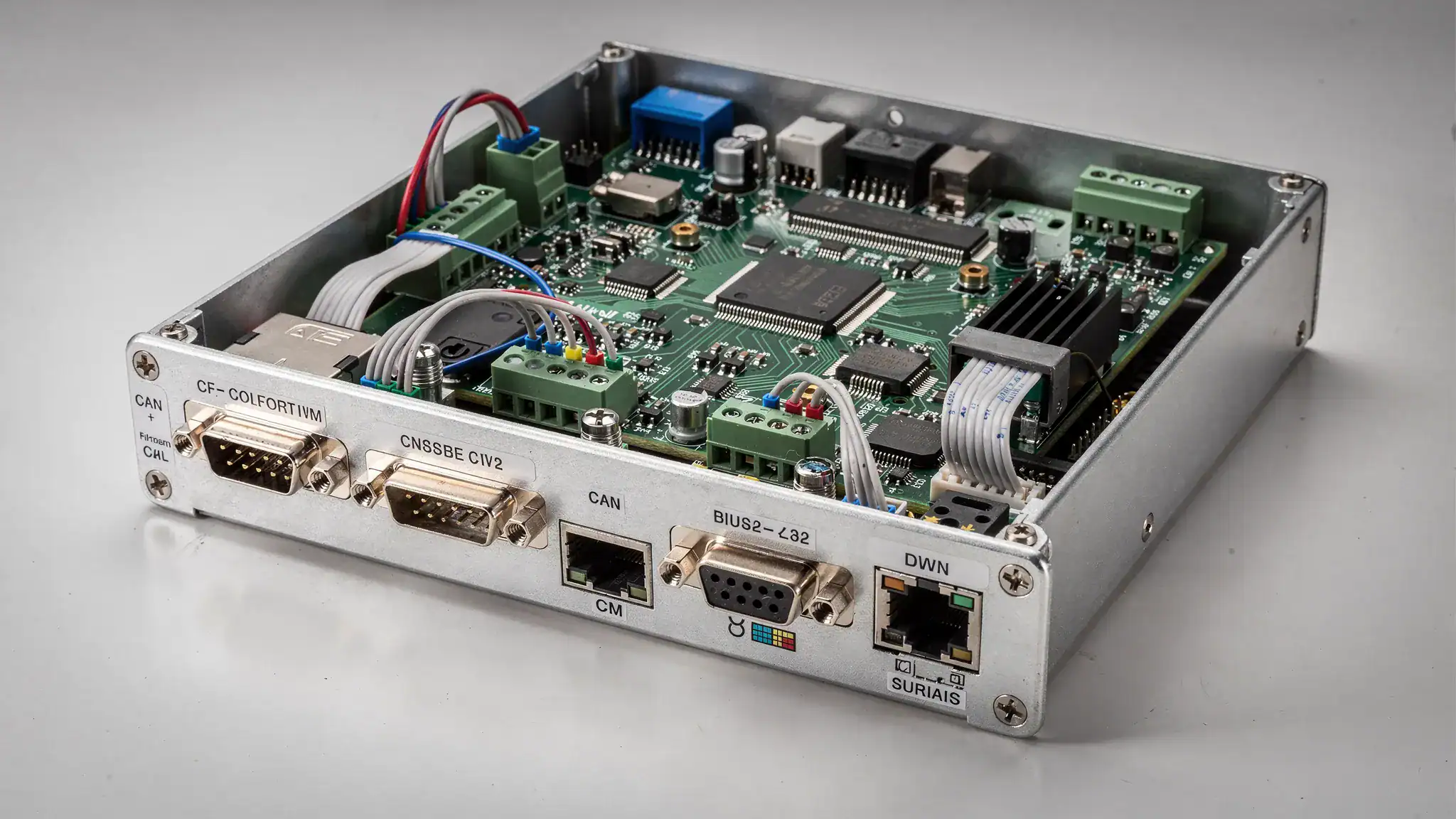
An embedded computer is a dedicated computing platform built into a larger product, machine or device. It reads signals, makes decisions, controls hardware and communicates with other systems, often without the end user ever seeing it.
If you are asking what is an embedded computer, the practical answer is this: it is the part of a product that turns electronics, sensors, motors, interfaces and software into reliable behaviour in the real world. In professional product development, that distinction matters. Choosing an embedded computer is not only a software or hardware decision. It affects safety, EMC performance, power consumption, enclosure design, manufacturability, serviceability and long-term product support.
For CTOs, technical directors, product owners and engineering managers, the key question is not whether embedded computing is interesting. The key question is when it is the right architecture for the product you are trying to build.
What is an embedded computer?
An embedded computer is a computing unit designed to perform specific functions inside a larger system. Unlike a desktop PC or laptop, it is not built to run many different applications for a human user. It is designed around a defined task, such as controlling a motor, reading sensor data, managing a battery, logging operating conditions, connecting a device to a network or supervising safety-related behaviour.
The term can refer to several hardware forms. In a simple product, the embedded computer may be a microcontroller on a custom PCB. In a more advanced machine, it may be an application processor, system-on-module, single-board computer, FPGA-based platform or system on chip. In all cases, the computing platform is part of the product architecture, not a general-purpose office computer placed next to it.
A good embedded computer is normally designed with constraints that general IT systems do not face. It may need to start reliably every time power is applied, operate for years with limited maintenance, tolerate heat and vibration, fit into a compact enclosure, pass EMC testing and remain manufacturable despite component lifecycle changes. These requirements shape both the electronics and the firmware from the beginning.
How an embedded computer differs from a PC, PLC or cloud system
An embedded computer can look similar to other computing platforms from a distance, but its design priorities are different. A PC is flexible. A PLC is standardised for industrial automation. A cloud system is scalable for data and services. An embedded computer is optimised for product-integrated control, measurement and communication.
| Platform | Main purpose | Typical strength | Typical limitation |
|---|---|---|---|
| Desktop or industrial PC | General computing, user applications and data processing | Flexible software environment and high processing power | Often larger, higher power and less optimised for product integration |
| PLC | Factory automation and machine control | Robust industrial I/O and familiar automation workflows | Less suited to compact, cost-optimised or highly integrated product electronics |
| Cloud system | Remote data processing, storage, dashboards and business logic | Scalable services, updates and analytics | Cannot replace deterministic local control where latency, safety or offline operation matter |
| Embedded computer | Dedicated control, sensing, communication and product intelligence | Integrated, efficient and tailored to the product | Requires careful hardware, firmware, compliance and lifecycle engineering |
This separation is important in connected products. The embedded computer may control the machine locally while sending selected data to a backend for monitoring or updates. Office IT, cybersecurity, cloud hosting and support are separate disciplines. For example, organisations operating in the Caribbean region may rely on managed IT and local cloud support in Antilles-Guyane while their embedded product engineering remains focused on electronics, firmware, control and compliance.
What an embedded computer does inside a product
In real products, the embedded computer often acts as the technical coordinator between the physical world and the product logic. It converts inputs into controlled outputs, while protecting the system against faults and maintaining predictable behaviour.
Common tasks include:
- Reading physical inputs from sensors, switches, encoders, current monitors, temperature probes or communication interfaces.
- Processing data locally to filter noise, detect events, calculate control actions or make operating decisions.
- Driving outputs such as motors, valves, relays, LEDs, displays, heaters, actuators or power stages.
- Communicating with other devices using wired or wireless interfaces such as CAN, Ethernet, RS-485, Bluetooth, Wi-Fi, cellular or proprietary protocols.
- Managing diagnostics, fault states, logs, firmware updates, power modes and user feedback.
In a maritime system, this could mean monitoring sensor values while controlling pumps or actuators under vibration, moisture and power variation. In robotics, it may coordinate motor drives, position feedback, safety logic and communication with a higher-level controller. In a high-tech instrument, it may combine analogue measurement, signal conditioning, calibration data and a user interface into one coherent product.
What a complete embedded computer architecture includes
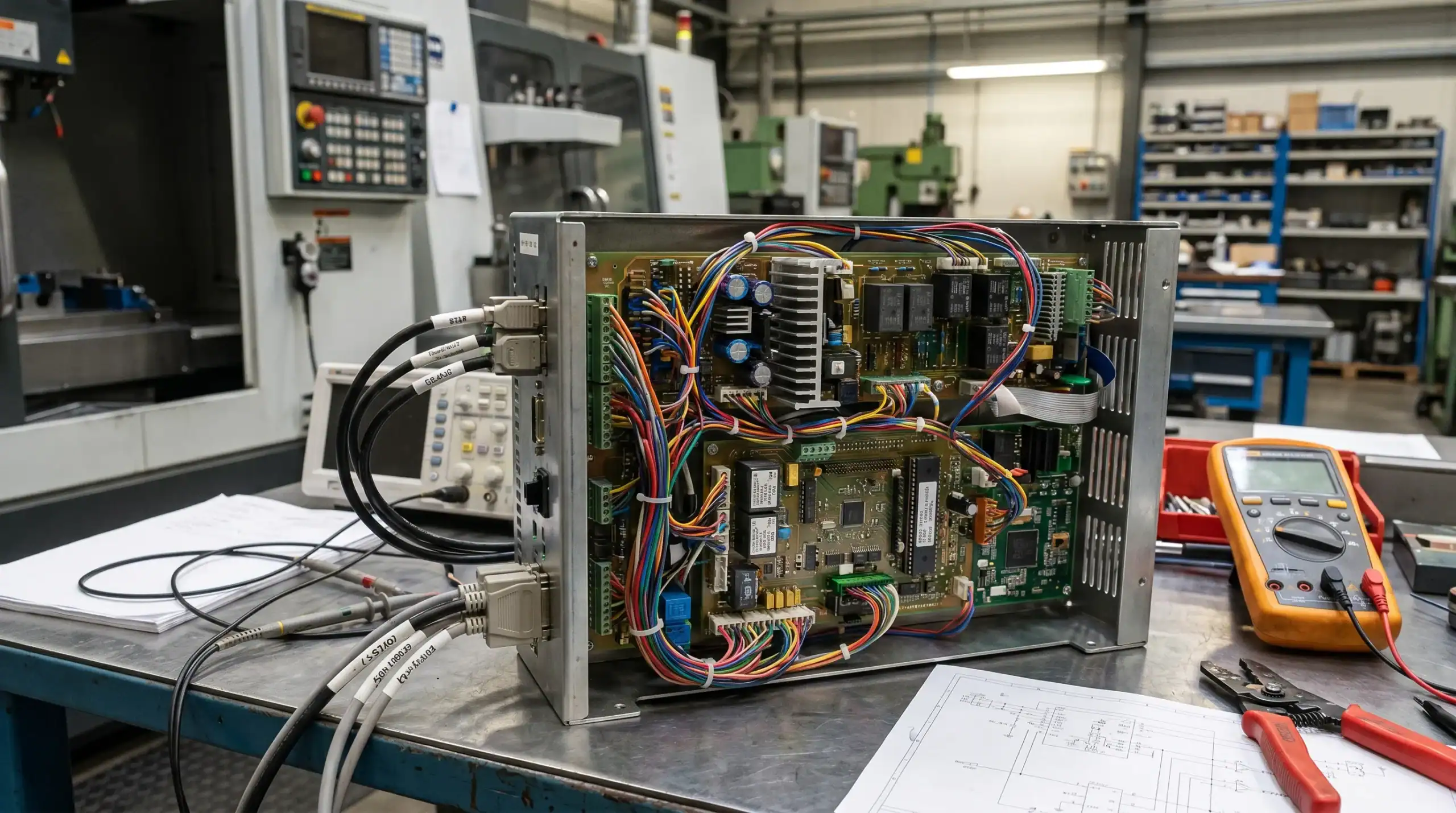
An embedded computer is not just the processor. It includes the processing core, memory, power supply, clocks, interfaces, sensors, actuators, protection circuits, PCB layout, firmware and often the mechanical integration around it. Each of these choices affects the final product.
The processor selection determines available performance, power use, development complexity and operating system options. A microcontroller may be ideal for real-time control with low power consumption. An application processor may be needed for a graphical interface, Linux-based software stack or advanced connectivity. An FPGA or SoC may be appropriate when timing, parallel processing or specialised signal handling is critical.
Power electronics are also central. The embedded computer must receive stable supply rails, survive transients and avoid disturbing sensitive analogue or radio circuits. In products with motors, batteries, heaters or high-current loads, the boundary between embedded computing and power design becomes especially important.
PCB layout then turns the architecture into physical reality. Poor grounding, long analogue traces, weak separation between power and signal circuits or insufficient filtering can create field failures even when the schematic appears correct. For a deeper breakdown of the building blocks involved, ProMicro explains what embedded hardware includes in a complete design.
When to use an embedded computer
An embedded computer is usually the right choice when the product needs dedicated local intelligence rather than only external automation or cloud-based logic. The stronger the requirements around reliability, integration, timing, size, power and product ownership, the more likely embedded computing becomes the correct route.
| Product requirement | Why an embedded computer fits |
|---|---|
| Deterministic local control | The product must respond predictably to sensor inputs, faults or user actions without depending on network availability. |
| Compact product integration | The electronics must fit inside a machine, enclosure, vehicle, device or instrument with defined mechanical constraints. |
| Low or controlled power consumption | The product must operate from batteries, limited supply power or strict thermal budgets. |
| Real-world robustness | The system must tolerate vibration, temperature variation, moisture, EMC exposure or electrical transients. |
| Product-specific IP | The control algorithms, measurement logic or communication behaviour are part of the product value. |
| Volume manufacturing | The electronics need to be scalable, testable, serviceable and economically manufacturable over time. |
| Compliance-driven design | The product must be designed with EMC, RED, CE, safety or sector-specific requirements in mind. |
For industrial devices, the choice is sometimes between an embedded computer, PLC, gateway or industrial PC. The best answer depends on the function, environment, production volume, expected lifecycle and certification risks. ProMicro covers this in more detail in its article on when embedded computing is the right choice for industrial devices.
When not to use an embedded computer
Embedded computing is powerful, but it is not always the best answer. If a one-off machine only needs standard I/O logic in a factory environment, a PLC may be more practical. If the product mainly needs a user interface, database connection and standard operating system software, an industrial PC may reduce development effort. If the main challenge is business data processing, a cloud or server architecture is likely more appropriate.
A development kit can also be sufficient for an early proof of concept, especially when the goal is to validate an algorithm, sensor principle or connectivity idea. However, development kits are rarely production-ready. They may include unnecessary functions, poor mechanical fit, uncertain supply continuity, unverified EMC behaviour or limited control over design details.
The decision should be based on the product roadmap, not only the first prototype. A shortcut that works in the lab can become expensive if it blocks certification, increases unit cost, creates supply risk or requires a redesign before volume manufacturing.
Engineering risks to resolve early
Many embedded computer problems start before the first PCB is routed. They begin with unclear requirements, hidden environmental assumptions or architecture choices that do not match the product context.
A strong embedded design process should define the operating environment, expected users, fault states, power conditions, communication interfaces, enclosure constraints and production volumes as early as possible. It should also identify compliance-related risks before the design is frozen. EMC, radio performance, thermal behaviour and safety-related design choices are much easier to influence early than after a prototype has already been built.
| Risk area | Typical cause | Early design response |
|---|---|---|
| EMC problems | Noisy power stages, poor grounding, weak filtering or unsuitable PCB layout | Design power, analogue, digital and radio sections as one integrated system. |
| Field instability | Lab conditions differ from vibration, moisture, temperature or power conditions in use | Translate the real application environment into measurable engineering requirements. |
| Scaling difficulty | Prototype choices are not suitable for sourcing, testing or assembly | Consider manufacturability, end-of-line testing and component availability early. |
| Software maintenance issues | Firmware built only for the first prototype | Plan update strategy, diagnostics, version control and service procedures. |
| Compliance delays | Standards considered after architecture decisions | Design with EMC, RED, CE and safety expectations in mind from the concept stage. |
This is where embedded computer development becomes broader than choosing a processor. It requires system engineering, analogue and power electronics, PCB design, firmware architecture, mechanical integration and lifecycle thinking.
Choosing the right embedded computing platform
The right platform depends on what the product must do, how it will be used and how long it must remain available. A simple microcontroller can be more reliable and cost-effective than a powerful processor if the task is mainly real-time control. A Linux-capable module can be justified when the product needs advanced networking, security features, data processing or a modern user interface.
| Platform type | Best suited for | Key engineering consideration |
|---|---|---|
| Microcontroller | Real-time control, sensing, low-power products and compact devices | Limited resources require disciplined firmware and careful peripheral selection. |
| Application processor or module | Connectivity, graphical interfaces, edge processing and complex software stacks | Boot time, thermal design, cybersecurity and update strategy become important. |
| FPGA or SoC | High-speed signal processing, parallel tasks and precise timing | Development complexity and verification effort are higher. |
| Industrial computer | Low-volume systems, standard OS applications and flexible HMI functions | Size, cost, power and long-term integration may be less optimised for product manufacturing. |
A professional product may also combine several computing elements. For example, a microcontroller can handle safety-critical or real-time control while a higher-level processor manages communication, logging or user interaction. This separation can improve reliability, but it must be designed carefully so that failure modes are understood.
From prototype to production-ready embedded computer
A prototype proves that the idea can work. A production-ready embedded computer proves that the product can work repeatedly, safely and economically in its intended environment. That is a much higher bar.
The transition from prototype to production typically includes schematic refinement, PCB optimisation, firmware hardening, enclosure integration, thermal checks, EMC pre-compliance testing, production test strategy and component lifecycle review. It also includes practical decisions about connectors, cabling, assembly, service access, firmware updates and documentation.
For OEMs and technical product companies, this is where an end-to-end electronics partner can reduce risk. The goal is not only to make the embedded computer function once. The goal is to create electronics that can be manufactured, tested, certified, maintained and supported over the product lifetime.
Frequently asked questions
What is an embedded computer in simple terms? An embedded computer is a dedicated computer built into a product or machine to control specific functions, process sensor data, drive outputs and communicate with other systems.
Is an embedded computer the same as an embedded system? Not exactly. The embedded computer is usually the computing part of the design, while the embedded system includes the complete combination of hardware, firmware, electronics, sensors, actuators, power supply, enclosure and product behaviour.
Can an embedded computer run Linux? Yes, some embedded computers use Linux, especially when they need networking, file systems, graphical interfaces or complex software. Smaller real-time products often use bare-metal firmware or an RTOS instead.
When is a PLC better than an embedded computer? A PLC is often better for standard factory automation, one-off machines and control panels where industrial I/O, maintainability and familiar automation tools are more important than compact product integration or volume manufacturing.
Why does embedded computer design affect EMC and compliance? Processor speed, PCB layout, power electronics, cabling, grounding, wireless interfaces and enclosure design all influence emissions and immunity. Considering compliance early helps reduce redesign risk later.
Need support choosing the right embedded architecture?
If you are developing a machine, device, vehicle subsystem or connected product, the embedded computer decision should be made together with the wider electronics architecture. ProMicro supports product teams with embedded systems, power electronics, analogue electronics, PCB design, prototyping and preparation for volume manufacturing.
When internal capacity or specialist knowledge is limited, ProMicro can help turn early product ideas into robust, scalable and production-ready electronics designed for real-world use.