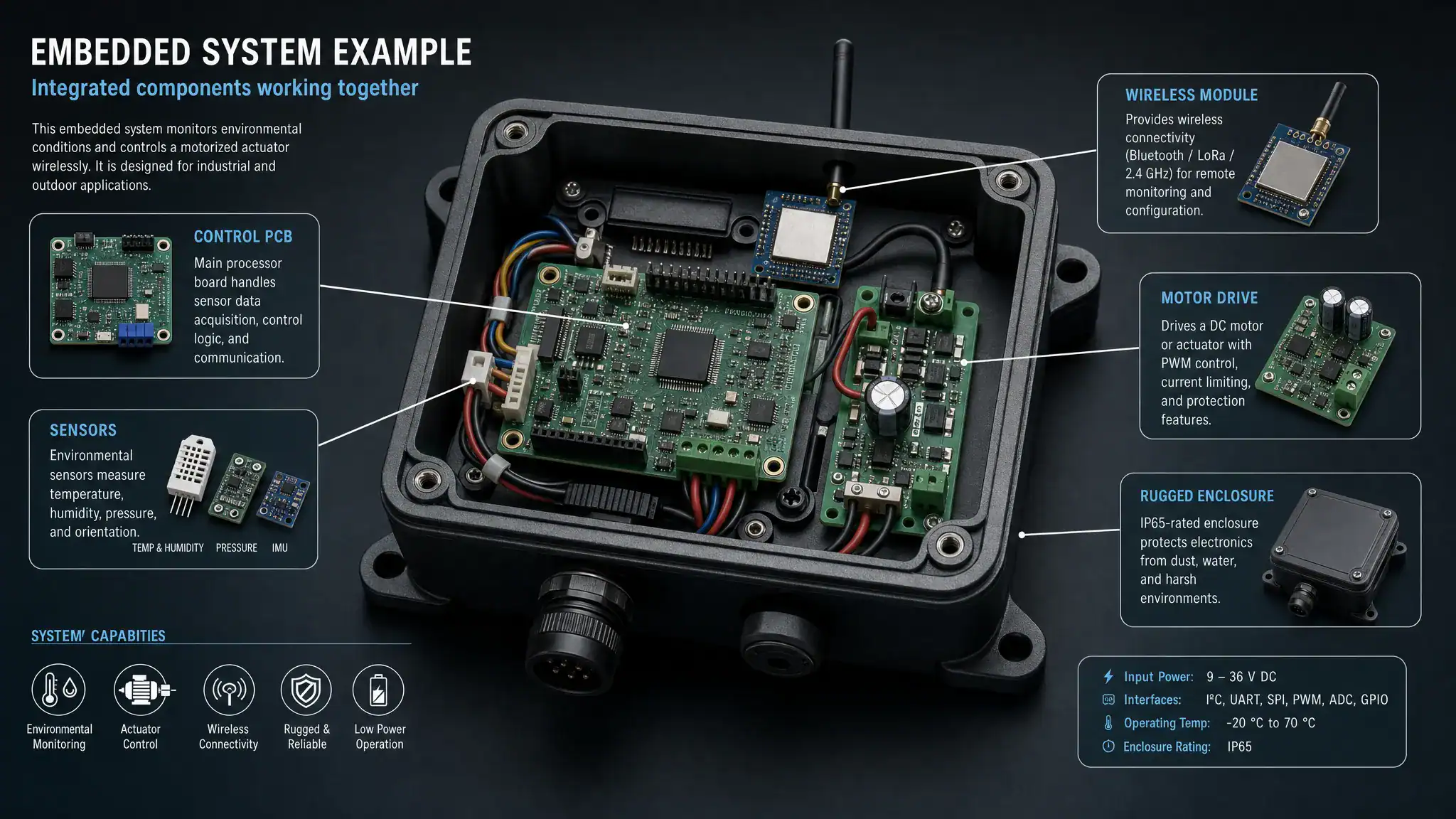
Embedded systems are easy to overlook because the best ones are often invisible. They sit inside machines, vehicles, instruments and connected products, quietly reading sensors, controlling power, driving motors, logging data and keeping equipment safe.
For engineers, CTOs and product development teams, embedded system examples are not just academic definitions. They show where early design choices affect reliability, EMC behaviour, certification risk, manufacturability and long-term support. A prototype can appear successful in the lab, yet fail later because the embedded electronics were not designed for heat, vibration, electrical noise, component availability or production variation.
Below are seven embedded system examples engineers see every day, including what each system does, why it matters and which hidden engineering risks are often missed.
What is an embedded system, in practical engineering terms?
An embedded system is a purpose-built combination of electronics, firmware and often mechanical integration that performs a dedicated function inside a larger product. Unlike a laptop or desktop computer, it is not designed for general-purpose use. It is designed to sense, calculate, control, communicate or protect a product in a specific operating context.
A typical embedded system may include a microcontroller or embedded processor, analogue front ends, power electronics, memory, communication interfaces, sensors, actuators and firmware. In many professional products, the embedded system is also closely tied to PCB layout, enclosure design, thermal behaviour, EMC performance and production test strategy.
If you want a more foundational explanation, ProMicro has a separate article on embedded systems in computer science that explains the basic architecture and how embedded systems differ from general-purpose computers.
For product teams, the key point is simple: an embedded system is not “just software” or “just a PCB”. It is the control centre that determines how a product behaves in real use.
| Everyday example | Embedded function | Typical engineering risk |
|---|---|---|
| Motor drive in a machine | Controls speed, torque and protection | EMC, thermal load, safety behaviour |
| Automotive ECU | Controls vehicle functions | Functional safety, vibration, lifecycle support |
| Smart sensor node | Measures and transmits data | Power consumption, wireless reliability |
| Power supply or charger | Converts and manages energy | Heat, efficiency, electrical protection |
| Maritime or defence controller | Monitors and controls critical functions | Harsh environment, robustness, maintainability |
| Laboratory instrument | Controls measurement or process conditions | Accuracy, traceability, calibration integrity |
| Connected professional device | Combines sensing, control and connectivity | Security, compliance, production scalability |
1. Motor drives inside production machines
A motor drive is one of the most common embedded systems in machine manufacturing and robotics. It may control a conveyor, spindle, actuator, pump, fan, robot joint or positioning system. The embedded electronics read feedback from encoders, Hall sensors or current sensors, then adjust power delivery to achieve the required speed, torque or position.
The visible result may be simple: a motor moves smoothly and stops when commanded. Under the surface, the embedded system is handling real-time control loops, current limiting, fault detection, thermal monitoring and communication with a higher-level controller.
This is where power electronics and firmware become inseparable. The PCB layout affects switching noise. The enclosure affects cooling. Firmware timing affects control stability. Cable routing affects EMC behaviour. A motor drive that works on the bench can create interference, heat problems or unstable behaviour once installed in a metal machine frame with long motor cables.
For engineering managers, this example shows why embedded development must consider the complete system from the start. The motor, mechanics, power stage, sensors, firmware and EMC strategy all influence one another.
2. Automotive ECUs and body control modules
Modern vehicles contain many embedded controllers, often called electronic control units, or ECUs. Some manage safety-critical functions, while others handle lighting, climate control, door systems, battery monitoring, infotainment interfaces, motor control or sensor fusion.
Even a relatively simple body control module can involve multiple input signals, output drivers, communication buses, low-power modes and fault handling. The embedded system must behave predictably across temperature extremes, voltage dips, electromagnetic disturbance and years of use.
Automotive embedded systems also demonstrate the importance of lifecycle thinking. Components must remain available, firmware must be maintainable and production testing must be repeatable. A design that depends on a marginal component choice or poorly documented firmware structure can become expensive to support later.
In automotive and mobility products, engineering quality is rarely defined by one clever feature. It is defined by stable behaviour under many operating conditions, including abnormal conditions such as load dumps, intermittent connectors, moisture, vibration and user misuse.
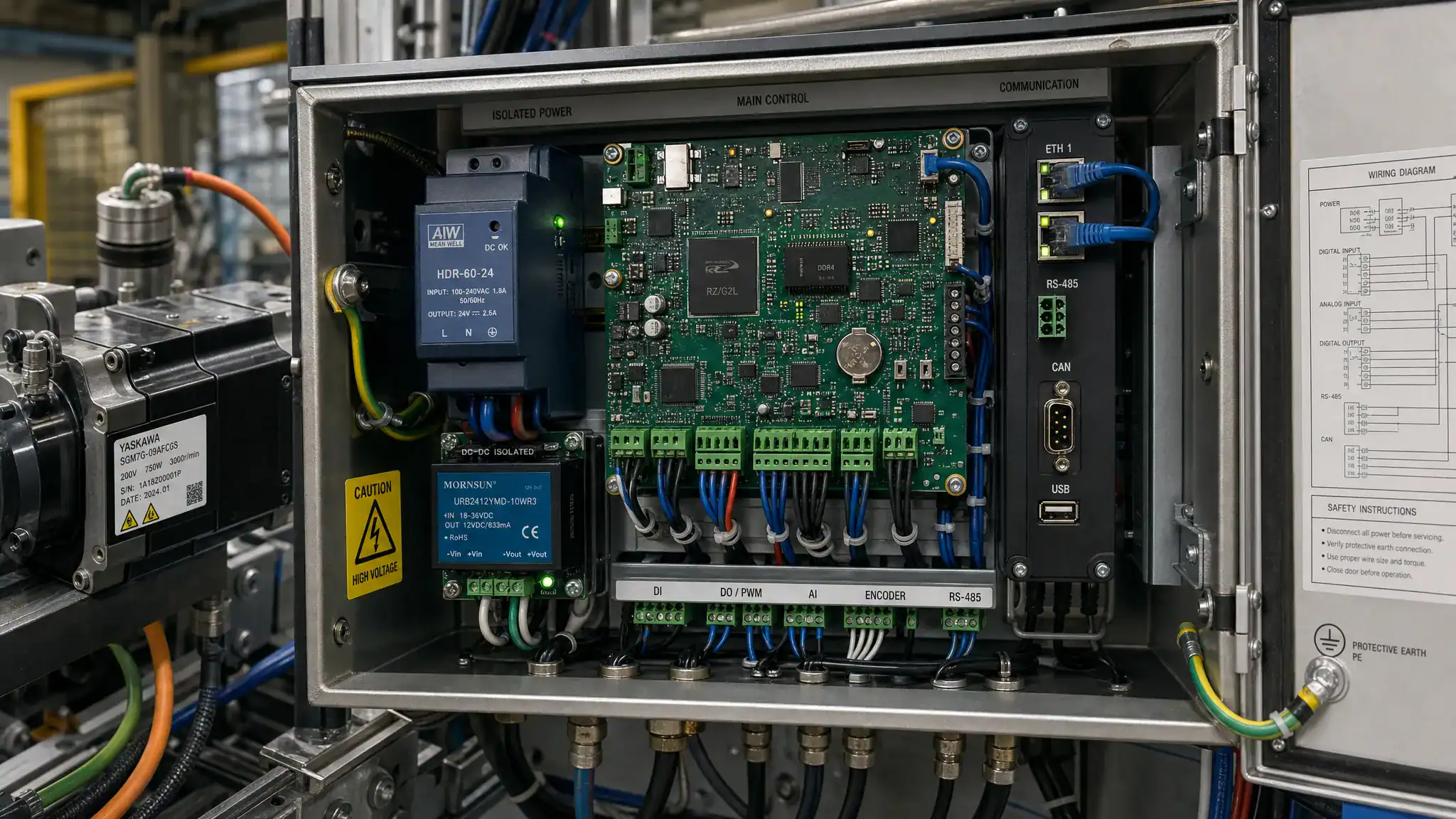
3. Smart sensors and industrial IoT nodes
A smart sensor is a compact embedded system that measures something, processes the signal locally and communicates useful information to another device or platform. Examples include vibration sensors on rotating equipment, environmental sensors in industrial facilities, pressure sensors in hydraulic systems or condition monitoring nodes in maritime assets.
The embedded system may include an analogue sensor interface, analogue-to-digital conversion, local filtering, firmware logic, wireless or wired communication, and power management. In battery-powered systems, every microamp matters. In industrial systems, noise immunity and robust communication often matter more than raw processing performance.
The most valuable smart sensors do more than transmit raw data. They reduce uncertainty by performing local diagnostics, detecting faults, compensating measurements or deciding when communication is necessary. This can reduce network load and improve the practical usefulness of collected data.
However, smart sensors also introduce design challenges. Wireless products may need to be designed with RED requirements in mind. Long-term installations must consider enclosure sealing, battery replacement, firmware updates and component availability. For professional markets, a smart sensor is only useful if it remains reliable after installation, not only during a demonstration.
4. Power supplies, chargers and energy management systems
Many embedded system examples are hidden inside power conversion products. A charger, DC-DC converter, battery management system or energy control module often includes embedded firmware that supervises voltage, current, temperature, state of charge, fault conditions and communication.
In these products, the embedded system does not simply “control electronics”. It protects users, batteries, loads and the wider product. It may detect overcurrent, undervoltage, overheating, reverse polarity, isolation faults or abnormal charging behaviour.
This type of embedded design requires strong integration between power electronics, analogue electronics and firmware. Current measurement must be accurate. Switching behaviour must be stable. Thermal design must match the real load profile. PCB creepage, clearance, grounding and layout choices can directly affect safety and EMC performance.
A common mistake is to treat the power section and embedded controller as separate design tasks. In practice, the firmware can only make good decisions if the analogue measurements are trustworthy, and the hardware can only be protected if firmware timing and failure handling are well considered.
For teams developing products that must perform outside a controlled lab, it is useful to think about embedded systems in demanding real-world use early in the project, especially when heat, vibration, moisture and EMC exposure are part of the application.
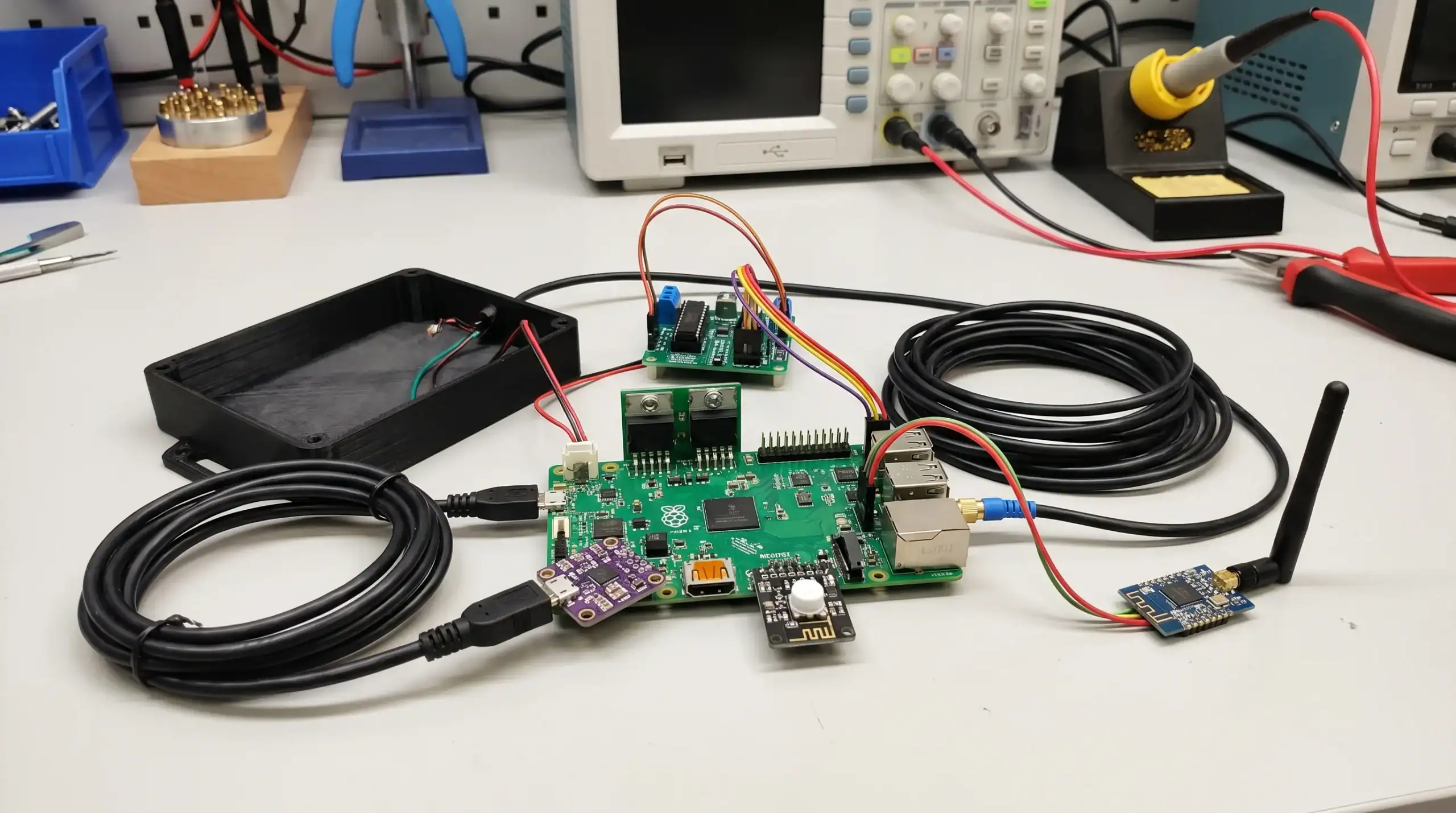
5. Maritime and defence monitoring controllers
In maritime and defence environments, embedded systems often perform monitoring, control and protection tasks where reliability is essential. Examples include battery monitoring, pump control, environmental monitoring, actuator control, communication interfaces, power distribution supervision and equipment health diagnostics.
These systems may not always be visible to the operator, but they influence whether the larger platform remains safe and available. They may need to operate in high humidity, salt exposure, vibration, shock, electrical noise or limited-maintenance conditions.
The engineering challenge is not only to make the controller function correctly. It must remain understandable, serviceable and robust throughout its operational life. That includes clear diagnostics, predictable fault behaviour, suitable connectors, appropriate enclosure choices and a realistic maintenance strategy.
For defence and maritime projects, hidden requirements are common. The written requirement may describe inputs, outputs and communication protocols, but the real application may also demand resistance to environmental stress, careful grounding strategy, controlled emissions, secure interfaces or long-term component support.
This is why early system engineering matters. The embedded controller should be designed around the operational environment, not only around the first functional specification.
6. Laboratory and high-tech measurement instruments
Laboratory and high-tech instruments are full of embedded systems. A temperature controller, dosing unit, optical measurement device, sample preparation system, automated test fixture or analytical accessory may all rely on embedded electronics for precision control and measurement.
These systems often combine sensors, analogue signal conditioning, actuators, user interfaces, data logging and communication with external systems. Accuracy depends on more than sensor choice. It also depends on noise handling, calibration strategy, PCB layout, firmware filtering, thermal stability and mechanical integration.
Traceability can also become part of the embedded design challenge. Instruments may need to store calibration data, log events, identify consumables or preserve measurement context. In research environments, documentation and verification are often part of the broader workflow. For example, a batch-tested research peptide supplier may publish batch-specific verification data for research-use materials, while the embedded instrument itself must protect measurement integrity and process data.
The lesson for product developers is that precision embedded systems need disciplined engineering. Small analogue errors, unstable references, thermal gradients or poorly defined calibration routines can undermine an otherwise well-designed product.
7. Connected professional devices and smart products
Connected professional devices are now common in high-tech, machine building, consumer electronics and industrial markets. Examples include smart access systems, connected control panels, monitoring gateways, advanced appliances, remote service modules and professional IoT-enabled equipment.
These products combine local embedded control with communication. The embedded system may read sensors, control outputs, present a user interface, connect via Bluetooth, Wi-Fi, cellular, Ethernet or another protocol, and exchange data with a cloud or local platform.
Connectivity changes the engineering problem. The product is no longer a closed electronic device. It must handle unreliable networks, firmware update strategy, cybersecurity considerations, data integrity, radio performance, regulatory constraints and user privacy expectations.
For companies developing connected products, the embedded system architecture must be chosen carefully. A design may need enough processing capacity for future firmware updates, but not so much complexity that cost, power consumption and validation effort become excessive. It may need modular hardware and software boundaries so that sensors, communication modules or production variants can change later.
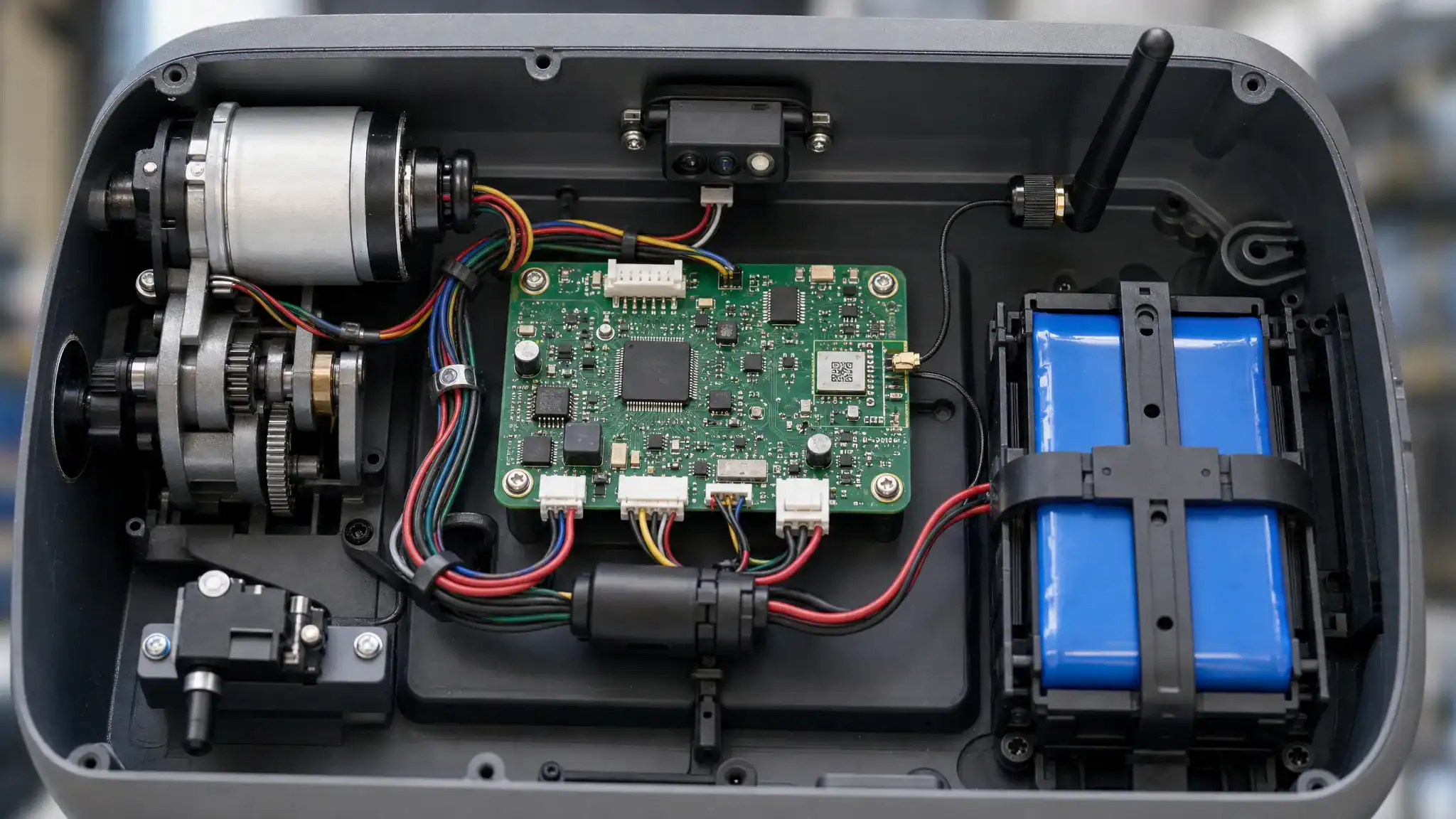
What engineers should notice across all seven examples
These examples appear in different industries, but they share the same engineering pattern. The embedded system is where product behaviour becomes real. It translates requirements into controlled physical action, measured data, safe shutdowns, communication and user feedback.
Several recurring design questions should be asked early:
- What real-world conditions will the electronics face during operation, transport, installation and maintenance?
- Which faults must be detected, tolerated or handled safely?
- How will the design behave under electrical noise, temperature variation and component tolerances?
- What compliance expectations, such as EMC, RED or CE, may influence architecture and layout?
- How will the product be tested, manufactured, updated and supported over its lifetime?
These questions are not administrative details. They shape the embedded architecture, component choices, PCB layout, enclosure, firmware structure and production strategy.
A strong embedded design process also distinguishes explicit requirements from hidden requirements. Explicit requirements are written in the specification: operating voltage, communication protocol, sensor range, dimensions, output power and interface behaviour. Hidden requirements come from the application context: cable lengths, operator misuse, condensation, nearby motors, maintenance skill level, certification risk and production variation.
When hidden requirements are discovered late, they can lead to redesigns, delayed certification, field failures or difficult manufacturing changes. When they are considered early, the project has a better chance of becoming a reliable and scalable product.
Why embedded system examples matter for product development
Looking at embedded system examples helps teams make better early decisions. A smart sensor, motor drive, charger or connected device may seem very different, but each depends on a balanced combination of hardware, firmware, power electronics, analogue design, mechanical constraints and lifecycle planning.
For decision-makers, the practical takeaway is that embedded development should not be reduced to writing firmware after the PCB is finished. Nor should it be reduced to laying out a board around a fixed component list. The best results come from system-level thinking, where electronics, software, compliance, enclosure, manufacturability and long-term support are considered together.
This is especially important when internal engineering teams are under time pressure or lack specialist capacity in power electronics, analogue electronics, EMC-sensitive design or production preparation. Bringing in the right expertise early can reduce technical risk before the project becomes locked into expensive design choices.
Frequently asked questions
What is an embedded system example in simple terms? A simple embedded system example is a motor controller inside a machine. It reads sensor feedback, runs firmware and controls power electronics so the motor moves at the correct speed or position.
Are embedded systems only used in industrial products? No. Embedded systems are used in vehicles, maritime equipment, defence systems, laboratory instruments, consumer electronics, medical devices, machines and connected products. The difference in professional products is often the required reliability, compliance and lifecycle support.
Why do embedded systems fail in real-world use? Common causes include poor EMC design, inadequate thermal management, weak power architecture, unsuitable components, incomplete fault handling, poor enclosure integration and limited understanding of the operating environment.
Is a PCB the same as an embedded system? No. A PCB may be part of an embedded system, but the full system includes firmware, electronics, sensors, power design, interfaces, mechanical integration, testing strategy and often manufacturing support.
When should embedded system design start in a product project? Embedded system thinking should start during concept and requirements definition. Early architecture choices influence compliance risk, cost, reliability, manufacturability and future product variants.
Turning embedded examples into reliable products
The seven examples above show why embedded systems are central to modern product development. They also show why reliability depends on more than selecting a microcontroller or writing firmware.
If your organisation is developing a machine, connected device, power electronics product or high-tech instrument, the right development approach can reduce risk before it reaches certification, field use or production scaling. ProMicro supports companies with embedded systems, power electronics, analogue electronics, PCB design, prototyping and preparation for volume manufacturing, with a focus on reliable electronics for real-world use.