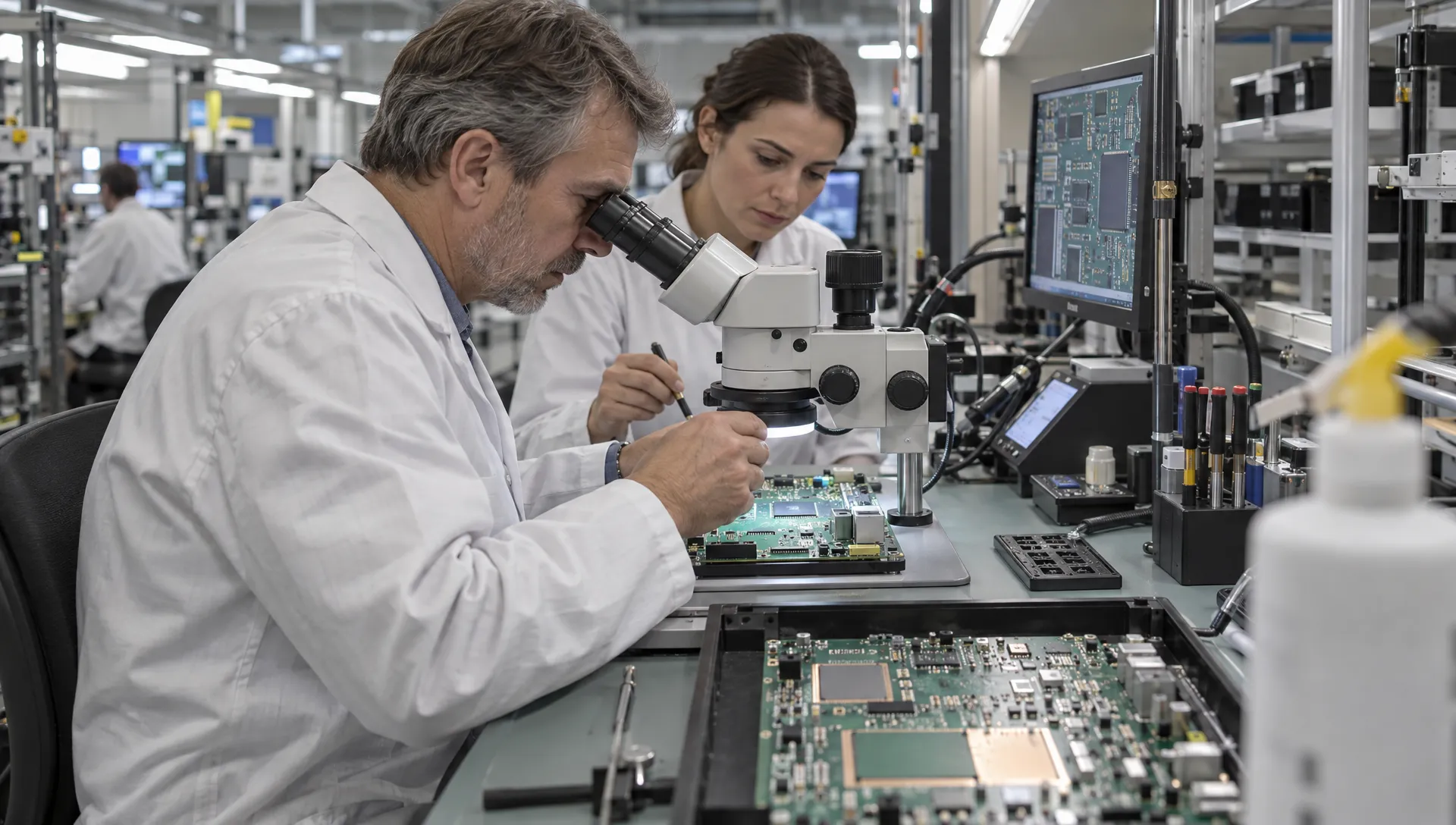
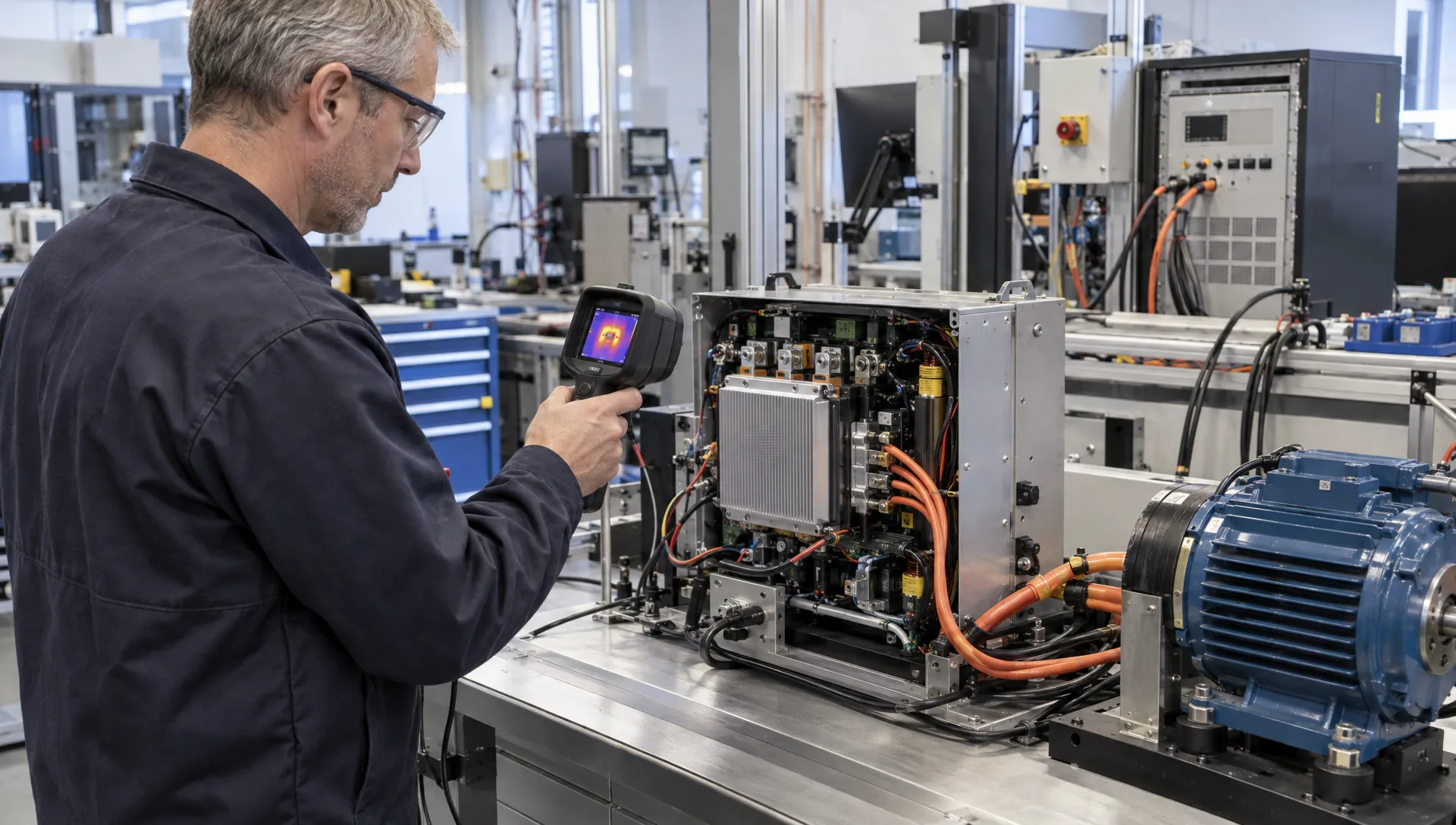
An embedded system is often described as a computer built into a larger product to perform a dedicated function. That definition is technically correct, but it is too narrow for teams developing professional electronics, machines, vehicles or connected devices.
If the question is what is the definition of embedded system in practice?, a more useful answer is this: an embedded system is a purpose-built combination of electronic hardware, firmware and interfaces that controls, monitors or communicates within a larger product under defined real-world constraints.
Those constraints matter. An embedded system is not only about the processor or the printed circuit board. It is about how the product behaves when it is exposed to heat, vibration, electrical noise, user mistakes, ageing components, supply variation, wireless interference and production tolerances. For OEMs and technical decision-makers, that practical definition is what separates a working prototype from a reliable product.
A practical definition of an embedded system
In product development, an embedded system usually has five characteristics.
First, it has a dedicated purpose. It is designed for a specific function such as controlling a motor, measuring pressure, managing battery charging, monitoring a sensor array or communicating with a cloud platform.
Second, it is integrated into a larger product. The user may never see the embedded system directly, but the product depends on it for behaviour, safety and performance.
Third, it combines hardware and software. Firmware running on a microcontroller or embedded processor interacts with sensors, actuators, power supplies, memory, communication interfaces and sometimes a user interface.
Fourth, it operates within constraints. These may include timing, energy consumption, size, cost, thermal limits, EMC behaviour, regulatory requirements or expected lifetime.
Fifth, it must be maintainable and manufacturable. A real product needs test points, programming methods, diagnostics, component availability, production documentation and a plan for long-term support.
This is why ProMicro often frames embedded systems as part of complete product engineering, not only as code on a chip. For a broader explanation of how these systems sit inside finished products, see this guide on what embedded systems are and why they matter in products.
What is and is not an embedded system?
The boundaries can be unclear, especially when products include cloud software, mobile apps, PLCs, gateways or off-the-shelf controller modules. The simplest test is to ask whether the electronics are dedicated to controlling or monitoring the product itself.
| Product element | Usually an embedded system? | Practical reason |
|---|---|---|
| Motor controller inside a robotic actuator | Yes | It controls real-time behaviour in a dedicated product function |
| Battery management electronics in a portable device | Yes | It monitors cells, controls charging and protects the product |
| Sensor node in an industrial IoT installation | Yes | It measures, processes and communicates within a defined environment |
| Cloud dashboard for fleet monitoring | No | It may support the product, but it is not embedded in the device itself |
| Smartphone app used to configure a device | No | It is general-purpose software running on a general-purpose platform |
| PLC cabinet controlling a machine | Sometimes | It may be part of machine control, but not always embedded in the product design |
| Vehicle ECU | Yes | It performs a dedicated control function under automotive constraints |
This distinction affects responsibility. If a cloud service fails, the device may still need to fail safely. If a mobile app is unavailable, a professional product may still need local diagnostics or default behaviour. If a PLC is used, the machine builder still needs to define interfaces, safety behaviour and EMC performance at system level.
The embedded system is more than the microcontroller
A common misunderstanding is to equate an embedded system with a microcontroller. The microcontroller may be central, but it is only one part of the system.
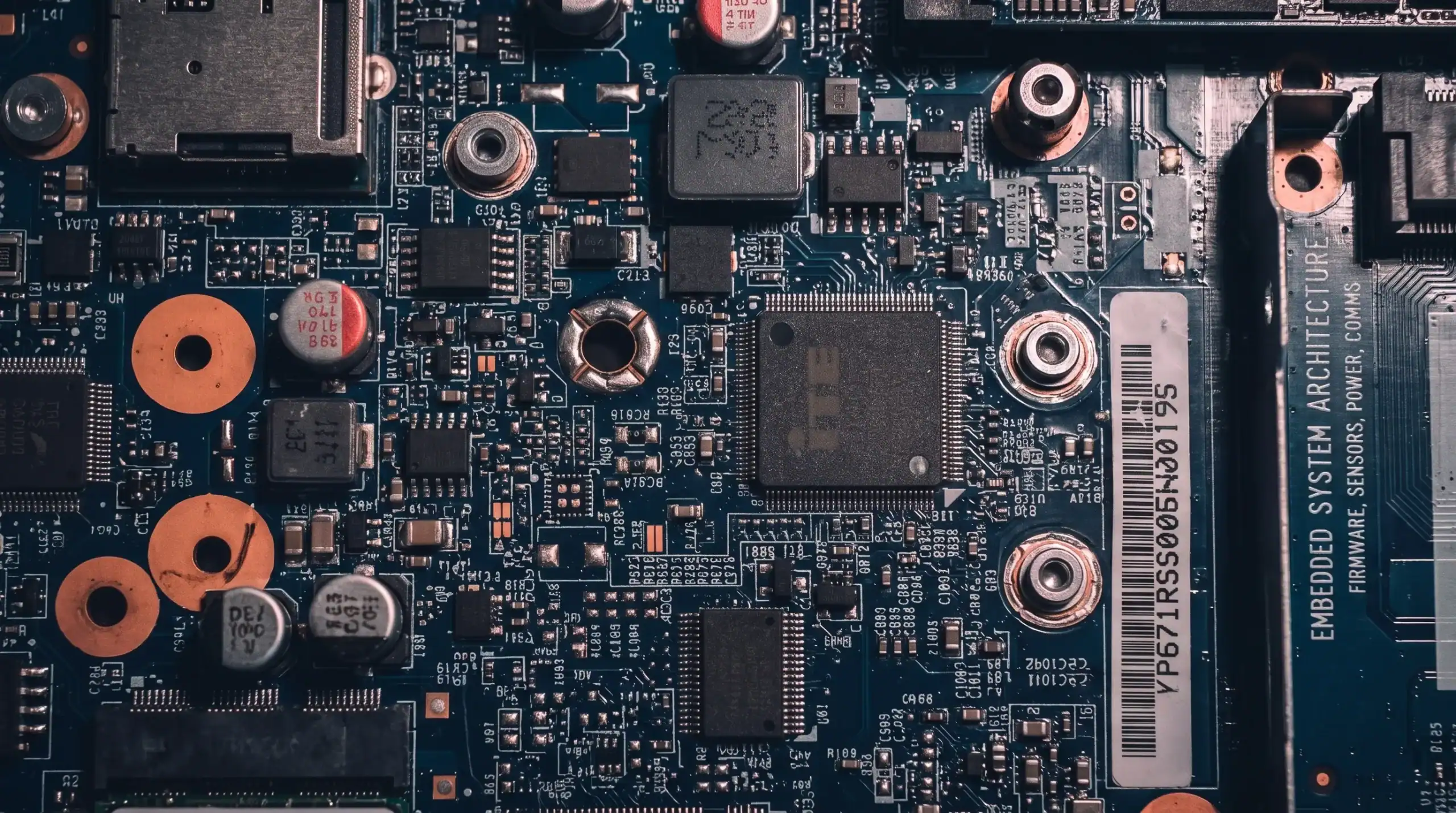
In a real product, the embedded system includes the processing platform, firmware, analogue front ends, power conversion, sensor interfaces, communication circuits, protection components, connectors, PCB layout, enclosure integration and production test strategy. Mechanical design also influences electronics behaviour through grounding, shielding, thermal paths, cable routing and access for service.
The main building blocks normally include:
- Processing: A microcontroller, microprocessor, DSP, FPGA or embedded computer selected for timing, power, memory and lifecycle needs.
- Firmware: Low-level software that manages control logic, communication, diagnostics, updates and fail-safe behaviour.
- Power electronics: Conversion, protection, battery charging, motor drives or load switching designed for efficiency and reliability.
- Analogue electronics: Signal conditioning, measurement circuits, filtering and sensor interfaces that determine data quality.
- Communication: Wired or wireless interfaces such as CAN, Ethernet, RS-485, Bluetooth, Wi-Fi, cellular or custom protocols.
- Physical integration: PCB layout, enclosure constraints, connectors, cables, sealing, cooling and manufacturing access.
The hardware choices set the conditions under which firmware can succeed. Poor grounding, inadequate filtering or weak power architecture cannot always be corrected in software. For a deeper breakdown, this article on what embedded hardware includes in a complete design is a useful next step.
Why the definition matters during product development
For a CTO, technical director or engineering manager, defining the embedded system early is not a semantic exercise. It is a way to reduce risk before expensive design decisions become fixed.
It clarifies system boundaries
A product team needs to know what the embedded system owns. Does it make safety decisions locally, or does it rely on a remote service? Does it store data on the device, or transmit it immediately? Does it control an actuator directly, or send commands to another controller?
Ambiguity at this stage causes problems later. Interfaces become unclear, firmware assumptions change, test coverage becomes incomplete and suppliers may optimise their own part without protecting the whole product.
It exposes timing and control requirements
Many embedded systems must respond within defined time limits. Motor drives, sensor fusion, valve control, braking functions, medical measurement devices and maritime control systems cannot be treated like ordinary application software.
A delay that is acceptable in a web interface may be unacceptable in a control loop. The practical definition of an embedded system therefore includes timing behaviour, interrupt handling, watchdogs, startup sequence, safe shutdown and behaviour after communication loss.
It connects electronics design with compliance risk
Embedded electronics are often close to sources of electromagnetic disturbance, such as motors, relays, switching power supplies, long cables, antennas or high-current loads. They may also need to operate near sensitive analogue measurement circuits.
Designing with EMC, RED, CE and safety requirements in mind starts long before formal testing. Component selection, PCB stack-up, filtering, grounding, shielding, cable design, enclosure integration and firmware states all influence whether the product behaves reliably in real environments.
For decision-makers, this is also a governance issue. If a product malfunction could contribute to injury or property damage, requirements traceability, test evidence and field diagnostics become part of responsible risk management. Legal contexts differ by jurisdiction, and when an issue becomes an injury claim, organisations and individuals rely on qualified advisers rather than engineering assumptions. The design lesson is simple: define safety responsibilities before prototypes reach the field.
It supports manufacturing readiness
A prototype that works on an engineer's desk is not yet a production-ready embedded system. Manufacturing introduces variation: component tolerances, soldering processes, programming steps, end-of-line testing, enclosure assembly, calibration and operator handling.
A practical embedded system definition should therefore include how the product will be built, programmed, tested, repaired and supported. This is especially relevant when a company intends to scale from a small prototype batch to volume manufacturing.
Examples in professional products
Embedded systems appear in almost every advanced product category, but their design priorities differ by market. A robotics system may focus on motor control, safety response and sensor fusion. A maritime device may prioritise sealing, corrosion resistance, power robustness and long-term availability. A high-tech measurement product may depend on analogue accuracy, noise control and calibration stability.
| Sector | Typical embedded function | Hidden engineering risk |
|---|---|---|
| Machine manufacturing | Motion control, HMI interface, sensor monitoring | Electrical noise, cable length, service conditions and safety response |
| Robotics | Motor drives, position feedback, edge processing | Real-time behaviour, thermal load, vibration and fault handling |
| Automotive | Control units, battery systems, diagnostic modules | Temperature range, EMC, lifecycle and safety-related architecture |
| Maritime | Monitoring, navigation support, power management | Moisture, corrosion, power instability and long service life |
| Defence | Rugged control, communication and sensing systems | Harsh environments, reliability, traceability and obsolescence management |
| Consumer electronics | Connectivity, battery operation and user interaction | Cost pressure, compact layout, charging safety and wireless compliance |
These examples show why the same textbook definition can lead to very different design work. The embedded system in a connected consumer device and the embedded system in a machine control unit may both use a microcontroller, but their engineering context is completely different.
How to define an embedded system for your project
A useful project definition should be specific enough to guide architecture, supplier discussions and risk analysis. It should avoid describing only features and instead capture behaviour, limits and responsibilities.
A strong definition usually covers the following points:
- Product function: What the embedded system must control, measure, communicate or protect.
- Operating environment: Temperature, vibration, moisture, dust, electrical noise, installation context and user behaviour.
- Interfaces: Sensors, actuators, power input, communication ports, antennas, displays, connectors and external systems.
- Timing behaviour: Control-loop timing, startup time, response to faults, watchdog behaviour and recovery modes.
- Power requirements: Voltage ranges, current peaks, battery life, efficiency, standby consumption and protection needs.
- Compliance context: EMC, RED, CE, safety, sector-specific standards and documentation expectations.
- Lifecycle needs: Production test, firmware updates, component availability, repair strategy and long-term maintenance.
This approach turns a vague product idea into engineering input. It also helps internal teams decide what can be developed in-house and where external embedded, power electronics or analogue expertise is needed.
Common mistakes when interpreting the definition
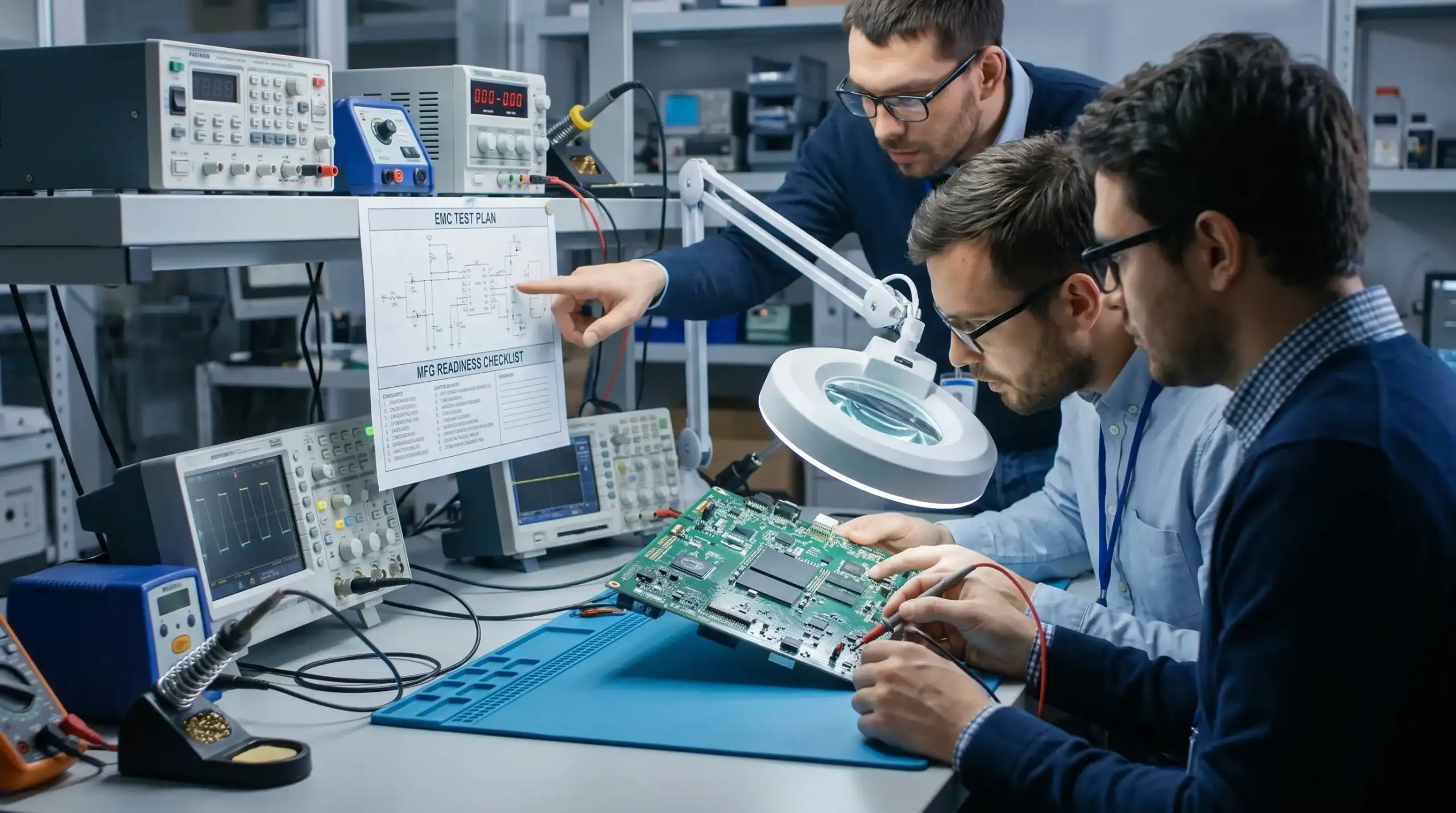
The first mistake is treating the embedded system as a small software task. Firmware is critical, but it depends on the hardware architecture, power design and physical integration around it. If the analogue signal is noisy, the power rail unstable or the PCB layout vulnerable to interference, firmware work becomes a workaround rather than a solution.
The second mistake is treating a prototype as proof that the embedded system is finished. Early prototypes are valuable because they reveal assumptions, but they rarely prove long-term reliability, compliance or manufacturability. Field conditions are less controlled than a lab bench, and certification tests expose weaknesses that normal functional testing may miss.
The third mistake is defining requirements only from the user's visible feature list. Many of the most important embedded requirements are hidden: what happens after a brownout, how the device behaves when communication is lost, whether diagnostic data can be retrieved after a fault, how firmware is updated, whether components will remain available and how the product is tested in production.
This is why embedded system work benefits from early system engineering. The goal is not to make the design more complex. The goal is to make the right complexity visible before it becomes expensive.
When to involve an embedded systems partner
Companies often involve an external partner when internal teams are short on specialist capacity, when a product combines several technical domains or when certification and production risks need earlier attention. This is common in high-tech equipment, machine building, robotics, automotive systems, maritime devices, defence applications and professional connected products.
A strong embedded systems partner should be able to discuss more than the processor choice. They should understand hardware and firmware trade-offs, power electronics, analogue electronics, PCB design, enclosure constraints, prototyping, compliance-oriented design and the route towards volume manufacturing.
That broader view is central to ProMicro's work. The team supports electronic product development from early concept through embedded system development, PCB design, prototyping and preparation for scalable manufacturing. The purpose is to help companies create electronics that are not only functional, but robust, manufacturable and maintainable over the product lifecycle.
For a related perspective on product intent and system behaviour, read ProMicro's guide on the purpose of an embedded system in a product.
Frequently asked questions
What is the definition of embedded system in simple terms? An embedded system is a dedicated electronic computing system built into a larger product to control, monitor or communicate as part of that product. In practice, it includes hardware, firmware, power, interfaces and real-world operating constraints.
Is an embedded system the same as a microcontroller? No. A microcontroller may be the main processing component, but the embedded system also includes firmware, sensors, actuators, power electronics, analogue circuits, communication interfaces, PCB layout and integration into the final product.
Does every embedded system need to be connected to the internet? No. Many embedded systems are not IoT devices. Connectivity is useful when a product needs remote monitoring, updates or data exchange, but local control, reliability and safety behaviour often remain essential even without internet access.
Why does the practical definition matter for compliance? Compliance-related behaviour is influenced by the complete embedded design, including PCB layout, grounding, filtering, wireless architecture, enclosure design, firmware states and power behaviour. Defining the system properly helps teams design with EMC, RED, CE and safety requirements in mind.
When should a company bring in external embedded expertise? External expertise is useful when a project involves complex hardware and firmware interaction, power electronics, analogue measurement, wireless communication, compliance risk, limited internal capacity or the need to move from prototype to production-ready electronics.
Need to define and develop a reliable embedded system?
If your product depends on electronics that must work reliably outside the lab, the definition of the embedded system should be established early and treated as a full product engineering decision.
ProMicro helps companies develop embedded systems, power electronics, analogue electronics and PCB designs with reliability, compliance awareness and manufacturing readiness in mind. If you are turning a complex product idea into scalable electronics, ProMicro can support the journey from concept and prototype towards long-term production.