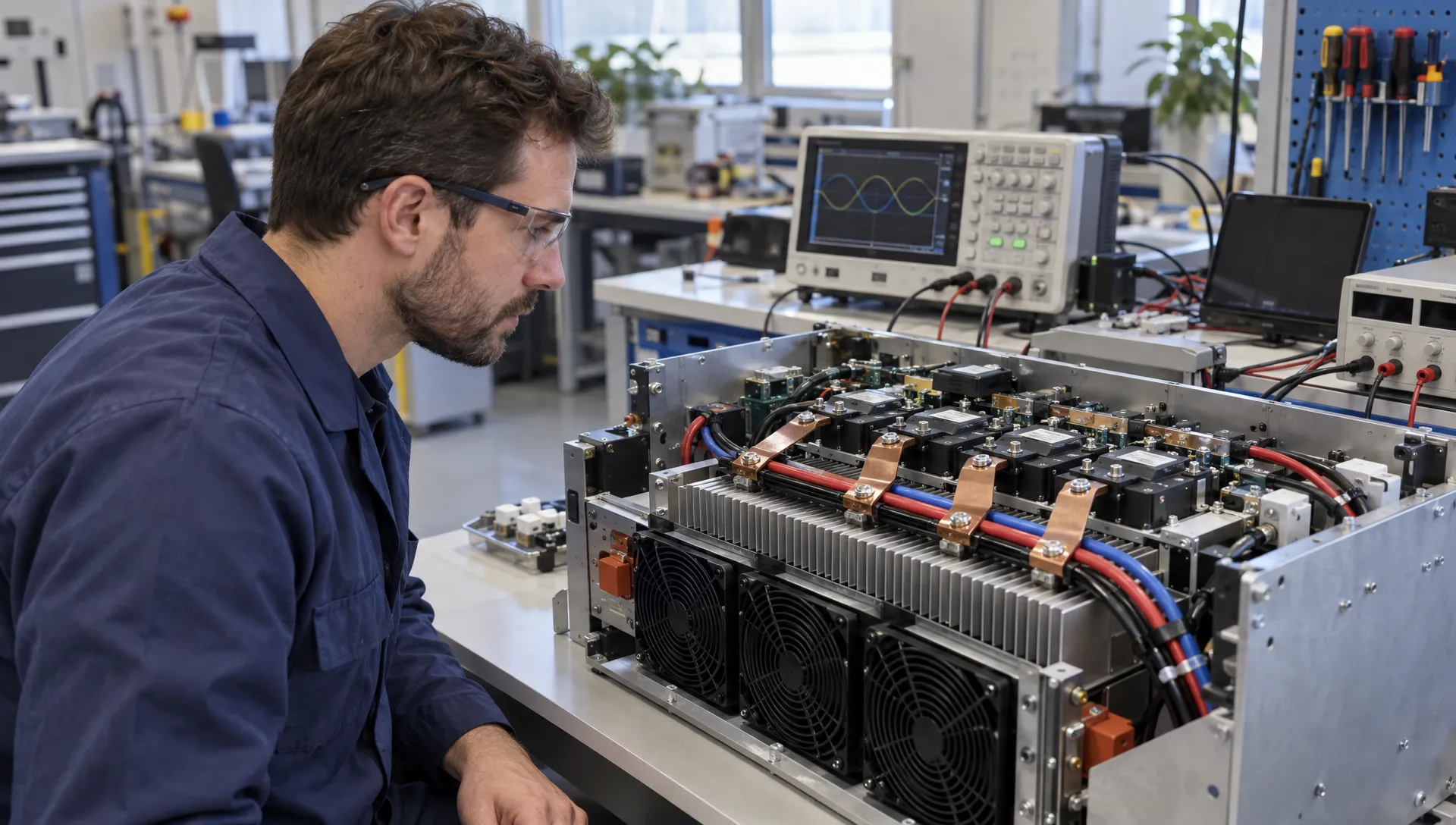
Embedded systems are becoming the strategic core of modern products. In 2026, the difference between a competitive product and a difficult-to-scale prototype often comes down to decisions made early: processor architecture, power strategy, connectivity, cybersecurity, compliance, and how well hardware and software are designed together.
For product owners, OEMs, and engineering teams, the key question is not simply “Which technology is new?” It is “Which trends will change product requirements, certification, cost, manufacturability, and lifecycle risk?”
Below are the embedded systems trends shaping product development in 2026, with practical implications for teams building connected, intelligent, reliable electronics.
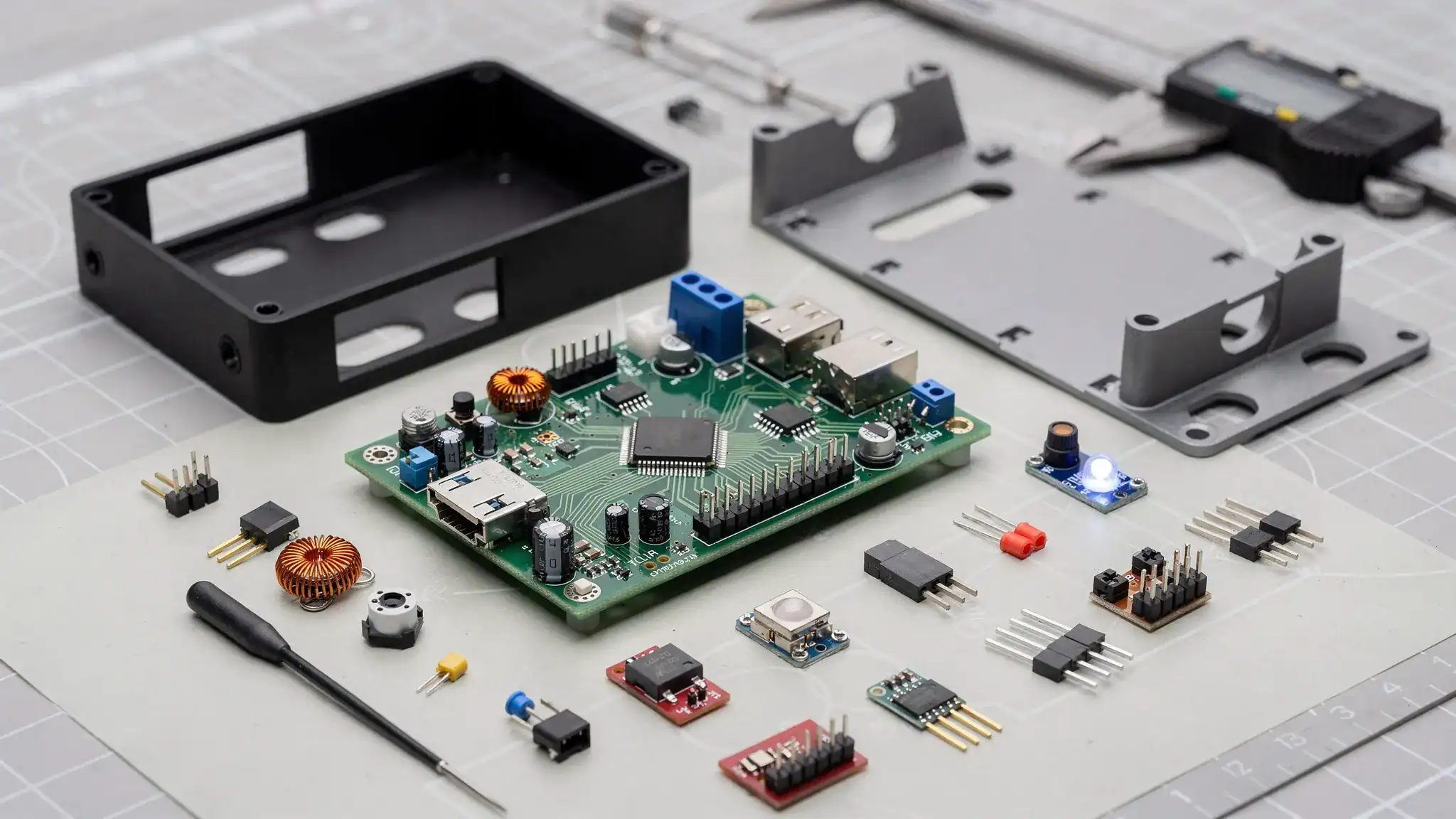
1. Edge AI moves from experimental to product-specific
AI at the edge is no longer limited to high-end gateways or cloud-connected devices. More products now use local intelligence for anomaly detection, sensor interpretation, predictive maintenance, image processing, voice control, and adaptive control loops.
The major shift in 2026 is not that every embedded product needs AI. It is that more teams are asking whether a device can make useful decisions locally, without relying on constant cloud access. This can improve latency, privacy, bandwidth usage, and system resilience.
In practice, edge AI affects embedded product design in several ways:
- Processor selection now depends on memory bandwidth, accelerator support, inference performance, and thermal limits.
- Firmware architecture must allow model updates without compromising reliability or cybersecurity.
- Validation becomes more complex because AI behavior must be tested against real-world variation, not only ideal lab inputs.
- Power consumption must be assessed across actual operating profiles, including active inference, sleep modes, wireless transmission, and sensor sampling.
For many industrial, agricultural, maritime, security, and high-tech applications, the best design is not the biggest processor. It is the right balance between deterministic control, local intelligence, long-term availability, and power efficiency.
2. Cybersecurity becomes a design requirement, not a software patch
Connected products are increasingly judged on how securely they are designed, updated, and maintained. In 2026, cybersecurity is becoming a hardware and system engineering topic as much as a software topic.
The EU Cyber Resilience Act is one reason for this shift. The European Commission explains that the regulation introduces cybersecurity requirements for products with digital elements. While many obligations apply later, manufacturers are already preparing because security architecture is difficult to retrofit after hardware is finalized.
For embedded systems, security-by-design typically affects:
- Secure boot and firmware authenticity
- Hardware root of trust or secure element decisions
- Encrypted communication and credential provisioning
- Debug interface protection
- Over-the-air update mechanisms
- Vulnerability handling and lifecycle support
- Software bill of materials practices
The business impact is significant. A product that cannot be updated securely may become a liability long before its mechanical or electrical lifetime ends. For long-life industrial equipment, field devices, and mission-critical electronics, cybersecurity planning must start at the architecture stage.
A useful principle is to define the threat model before choosing the microcontroller, connectivity stack, or update strategy. That threat model should consider who can access the product physically, which interfaces are exposed, what data is processed, and what happens if the device is compromised.
3. Connectivity choices become more strategic
Connectivity has become one of the most consequential design decisions in embedded products. In 2026, teams are moving beyond the simple question of “Should this product be connected?” and toward more specific questions: connected to what, how often, at what power cost, under which security model, and with which interoperability requirements?
Different applications require very different communication strategies. A battery-powered sensor may prioritize low-power wireless and long sleep cycles. An industrial controller may require deterministic Ethernet, fieldbus compatibility, or isolated interfaces. A secure communication device may prioritize controlled data paths and robust encryption. A consumer or building product may need interoperability with broader ecosystems.
Connectivity decisions influence the whole product:
| Connectivity consideration | Why it matters | Design implication |
|---|---|---|
| Power budget | Wireless transmission can dominate energy consumption | Sleep strategy, duty cycle, antenna efficiency, and battery sizing must be designed together |
| Antenna and enclosure | Mechanical decisions can reduce RF performance | PCB layout, enclosure material, placement, and certification planning must align early |
| Security | Connectivity expands the attack surface | Secure provisioning, authentication, encryption, and update paths are required |
| Compliance | Radio products face additional testing | Certification planning should be part of the project timeline |
| Lifecycle | Networks and protocols evolve | Products need maintainable firmware and realistic support assumptions |
This is where embedded, RF, mechanical, and power design overlap. A radio module may look straightforward on a datasheet, but performance depends heavily on PCB layout, grounding, enclosure design, cabling, and the intended environment.
4. Power efficiency and thermal behavior shape the user experience
Power design has always mattered, but in 2026 it is becoming a front-line product differentiator. Whether the product is battery-powered, mains-powered, vehicle-powered, or part of an industrial system, power efficiency affects reliability, enclosure size, thermal performance, certification, operating cost, and user satisfaction.
For compact products, thermal limits can restrict processor choice, wireless duty cycle, charging speed, or power stage design. For industrial products, inefficient power conversion can reduce lifetime and increase failure risk. For high-performance systems, power electronics decisions can create or solve EMC challenges.
The most successful embedded products treat power architecture as a system-level design activity. That means considering regulators, switching frequencies, load transients, grounding, thermal paths, component derating, and EMC behavior together.
This is especially important when moving from a prototype to a product that must survive real operating conditions. Evaluation boards and reference designs are useful starting points, but they rarely represent the final enclosure, cable routing, thermal environment, production tolerances, or electromagnetic environment.
ProMicro has written more about this in the context of custom power electronic solutions, where application-specific design can help avoid the limitations of generic modules.
5. Modular architectures reduce risk and accelerate product families
Many companies are no longer building one isolated embedded product. They are building product platforms, product families, variants, and future generations. That makes modular architecture a major trend in 2026.
A modular approach can apply to hardware, firmware, software interfaces, test infrastructure, and mechanical design. The goal is not to make everything generic. The goal is to separate stable building blocks from application-specific elements.
For example, a product family might share a core processing module, power architecture, firmware update mechanism, and production test strategy, while varying sensor interfaces, communication options, I/O boards, or enclosure configurations.
Good modular design can bring several advantages:
- Faster development of follow-up products
- Easier reuse of validated hardware and firmware blocks
- More predictable compliance and test planning
- Reduced engineering effort for variants
- Better lifecycle management when components change
However, modularity must be designed carefully. Over-generalized platforms can become expensive, oversized, or unnecessarily complex. The most effective embedded platforms are based on realistic product roadmaps, not abstract flexibility.
For a deeper look at this topic, see ProMicro’s article on scalable embedded system development.
6. Hardware and software co-design becomes essential
The boundary between hardware and software is less fixed than it used to be. In modern embedded systems, performance, reliability, safety, and power consumption depend on how well hardware and software decisions are made together.
A few common examples show why co-design matters:
A sensor interface may need analog filtering, digital filtering, calibration routines, and firmware compensation to work reliably. A motor controller may require power electronics design, PCB layout, real-time control software, thermal protection, and EMC-aware switching behavior. A connected product may need hardware security features, bootloader design, cloud integration, and production provisioning to work as one secure system.
In 2026, more engineering teams are using structured but flexible development methods that allow hardware, software, and mechanical workstreams to progress in parallel. This reduces late surprises, provided that interfaces, assumptions, and tests are clearly defined.
A practical co-design process often includes:
- Early system architecture and interface definition
- Firmware involvement during hardware requirements
- Hardware test points and debug access designed from the start
- Prototype bring-up planning before PCB release
- Iterative validation against real use cases
- Production test strategy before volume manufacturing
This approach helps prevent a common failure mode: hardware that is electrically functional but difficult to debug, update, calibrate, certify, or manufacture.
7. EMC and compliance shift earlier in the development process
Compliance is not becoming simpler. Products are more connected, more compact, more power-dense, and more software-defined. That increases the risk of late-stage redesigns if EMC, safety, radio, environmental, or sector-specific requirements are not considered early.
EMC is a particularly important example. PCB layout, grounding, switching behavior, enclosure design, cable routing, connectors, and filtering all influence electromagnetic compatibility. If these are addressed only after a failed test, the fix may require board changes, mechanical changes, component changes, or schedule delays.
A better approach is Design for Compliance, where relevant standards and risk areas are identified early, then reflected in architecture, schematic design, PCB layout, enclosure decisions, and pre-compliance testing.
ProMicro’s article on what EMC is and why it matters explains why late EMC testing can create unnecessary cost and delay.
In 2026, compliance-aware design is especially important for products with:
- High-speed digital interfaces
- Wireless communication
- Switching power converters
- Motors, actuators, or high-current loads
- Long cables or external connectors
- Compact enclosures with limited grounding options
- Safety-critical or industrial applications
The earlier compliance is integrated, the more freedom the team has to solve issues elegantly rather than with expensive last-minute patches.
8. Lifecycle management becomes a core engineering discipline
Component availability, firmware maintenance, regulatory expectations, cybersecurity updates, and product variants all make lifecycle management more important in 2026.
An embedded product does not end at prototype approval. It must be manufactured, tested, shipped, supported, updated, repaired, and sometimes redesigned when components reach end of life. If these realities are ignored during development, the product may become difficult to scale or maintain.
Lifecycle-aware design includes:
- Selecting components with suitable availability and documentation
- Planning alternatives for high-risk parts
- Designing for manufacturability and testability
- Maintaining firmware update paths
- Capturing design decisions and verification results
- Monitoring product changes, revisions, and field feedback
This is particularly relevant for companies developing industrial or professional electronics, where products may remain in service for many years. A design that is optimized only for the first prototype can become expensive when production volume increases or when a key component becomes unavailable.
9. Test automation and production readiness move upstream
In 2026, successful teams are thinking about production testing before production starts. This includes electrical test points, programming access, calibration procedures, boundary conditions, automated test fixtures, and data capture during manufacturing.
Early production-test planning improves more than manufacturing efficiency. It also improves engineering quality. When testability is designed into the product, prototypes are easier to bring up, failures are easier to diagnose, and validation becomes more repeatable.
For embedded products, production readiness often requires alignment between PCB design, firmware, mechanical access, connectors, labeling, and manufacturing partners. Decisions such as where to place test pads or how to provision security credentials can have major downstream consequences.
This trend also supports faster iteration. If a team can measure repeatable performance across prototypes and pilot units, it can make better decisions before moving to volume manufacturing.
10. Product teams choose partners for systems thinking, not only capacity
As embedded products become more integrated, companies are increasingly looking for development partners who can connect disciplines: embedded software, analog electronics, power electronics, PCB layout, mechanical constraints, compliance, prototyping, and manufacturing preparation.
The reason is simple. Many product risks exist between disciplines. A firmware decision affects power consumption. A housing decision affects RF performance and EMC. A component choice affects supply chain risk. A PCB layout decision affects thermal behavior and certification.
Working with an external electronics design partner can be valuable when the collaboration is structured around clear requirements, transparent decision-making, and shared technical responsibility. ProMicro has covered this in more detail in its article on working with an external electronics design partner.
What these trends mean for new product development in 2026
The common theme across these trends is integration. Embedded systems are no longer just control boards inside a product. They are the foundation for performance, security, connectivity, intelligence, reliability, compliance, and customer experience.
For teams planning a new product or next-generation platform, the following questions are worth answering early:
- What functions must run locally, and what can depend on external systems?
- What cybersecurity responsibilities will apply during the product lifetime?
- Which connectivity choices are essential, and which add unnecessary complexity?
- How will power, thermal behavior, and EMC interact in the final enclosure?
- Which parts of the architecture should be reusable across future variants?
- How will the product be tested, programmed, calibrated, and updated in production?
- What lifecycle risks could affect the product after launch?
The best time to answer these questions is before schematic design and PCB layout are locked. Early decisions create the design space. Late decisions often become compromises.
Frequently Asked Questions
What is the biggest embedded systems trend in 2026? The biggest trend is the shift toward integrated system design. Edge AI, cybersecurity, connectivity, power efficiency, compliance, and lifecycle management are increasingly connected, so successful products require coordinated hardware, firmware, software, mechanical, and manufacturing decisions.
Does every embedded product need edge AI in 2026? No. Edge AI is valuable when local decision-making improves latency, privacy, reliability, or operating cost. If a simpler deterministic algorithm meets the requirement, it may be the better choice. The decision should be based on product value, not hype.
Why is cybersecurity important for embedded systems? Embedded products often control physical processes, collect data, connect to networks, or remain in the field for years. Security features such as secure boot, firmware signing, protected debug access, and update mechanisms are much easier to design early than to retrofit later.
How early should EMC be considered in an embedded project? EMC should be considered during system architecture, not only during final testing. Power architecture, PCB layout, grounding, cables, enclosure design, and switching behavior can all affect EMC performance.
How can companies make embedded products easier to scale? Start with clear requirements, modular architecture, component lifecycle planning, design for manufacturability, production test planning, and a realistic roadmap for future variants. Scaling is much easier when these decisions are made before the prototype stage.
Build embedded products that are ready for 2026 and beyond
If you are developing a connected, intelligent, power-sensitive, or compliance-critical product, the architecture decisions you make now will shape its performance and scalability for years.
ProMicro supports companies with end-to-end electronic design services, including embedded system development, power and analog electronics, PCB design, system engineering, enclosure design, rapid prototyping, volume manufacturing support, and lifecycle management.
Whether you are refining a concept, preparing a prototype, or planning a scalable product platform, contact ProMicro to discuss how to turn your embedded product idea into a robust, manufacturable solution.