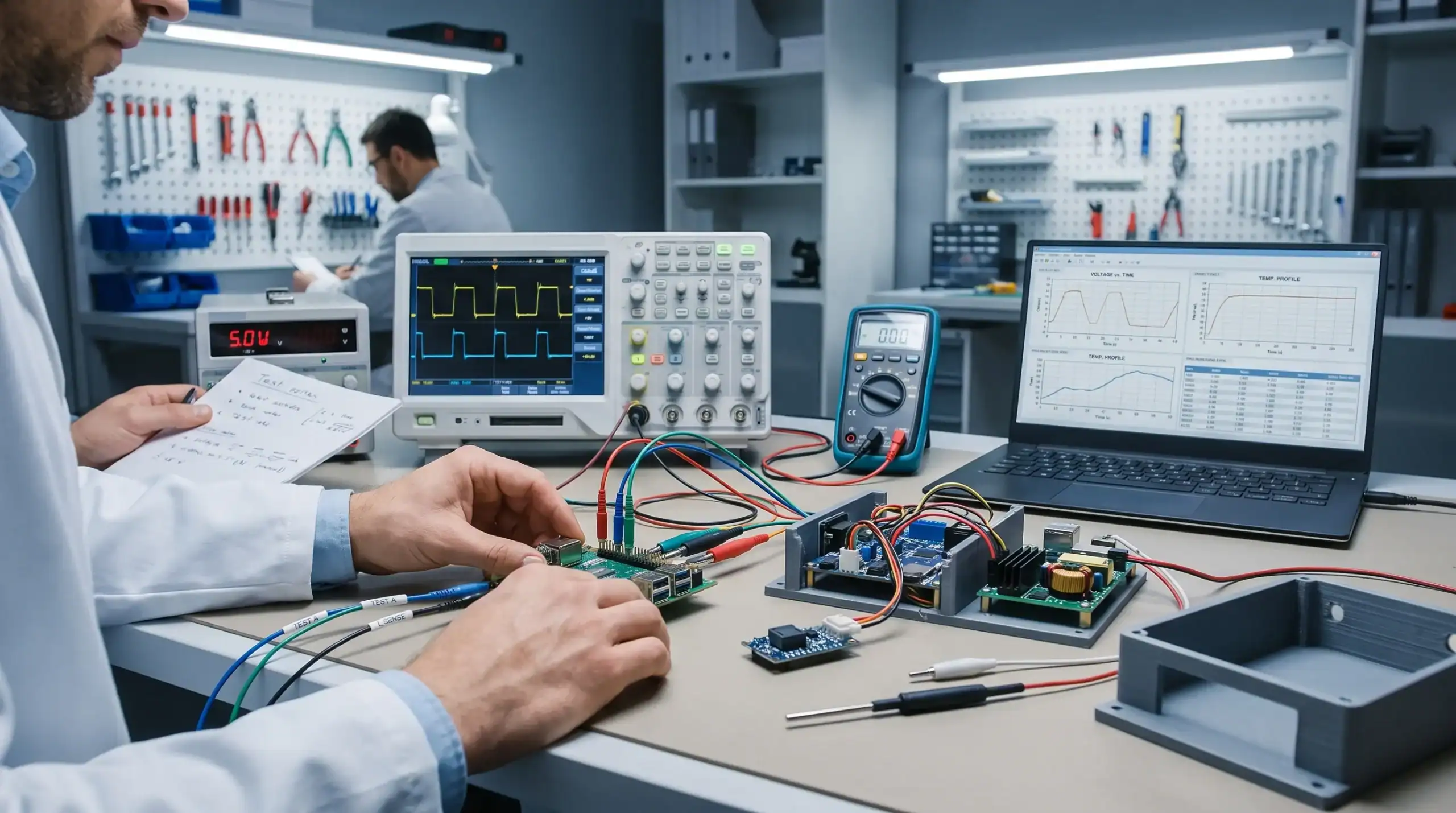
When a launch date is fixed, a customer demo is approaching or a certification slot is already booked, electronics teams often reach for rapid prototyping as a way to move faster. That instinct is usually correct, but only if the prototype is designed to answer the right questions.
A prototype that merely proves that “something works” can create false confidence. A prototype that exposes the weakest assumptions in the system can save weeks of redesign, prevent late-stage EMC surprises and give management better decisions under pressure.
For embedded systems, power electronics, analogue electronics and connected products, rapid prototyping is not just about speed. It is about learning quickly without creating technical debt that blocks production later.
Why time pressure changes the purpose of a prototype
In a calm development process, teams can investigate alternatives, run extended simulations, test edge cases and document each decision thoroughly. Under time pressure, the challenge is different. You need to decide what must be known now, what can be deferred and which unknowns could become expensive later.
That is where many electronics projects run into trouble. A team may build a functional demonstrator quickly, but leave unanswered questions around thermal behaviour, EMC risk, power integrity, connector robustness, firmware update strategy, enclosure constraints or component availability. The prototype looks successful, yet the product still carries significant risk.
A better approach is to define the prototype as an evidence-gathering tool. Instead of asking “Can we build a prototype quickly?”, ask:
- Which assumptions could stop the project if they are wrong?
- Which technical risks are hardest to fix later?
- Which behaviours must be tested in the real operating environment?
- Which decisions do we need before committing to PCB layout, tooling, certification or production planning?
This mindset is especially important for companies building professional products in high-tech, machine manufacturing, robotics, automotive, maritime, defence or industrial IoT environments. In these markets, prototypes are not only used to impress stakeholders. They are used to reduce uncertainty before costly commitments are made.
Prototype the risk, not the whole product
Under pressure, teams sometimes try to build a miniature version of the final product. That can be useful for demonstrations, but it is not always the fastest route to useful engineering insight.
In many projects, the smartest prototype is deliberately incomplete. It focuses on the part of the system that carries the highest uncertainty. For example, a motor drive prototype may focus on current sensing, switching behaviour and thermal margins before the complete user interface exists. A wireless product may first validate antenna placement and power budget before the industrial design is final. A sensor-based system may prototype the analogue front end and noise behaviour long before the enclosure is polished.
The table below shows how different prototype types support different decisions.
| Prototype focus | Main question answered | Typical value under time pressure |
|---|---|---|
| Feasibility prototype | Can the core technology work in principle? | Prevents investment in an unrealistic concept |
| Architecture prototype | Is the system structure technically sound? | Reduces late changes to interfaces, power domains and processing choices |
| Risk prototype | Which design risk needs proof first? | Targets EMC, thermal, analogue, wireless, motor or safety-related uncertainty |
| Integration prototype | Do hardware, firmware, mechanics and user context work together? | Exposes hidden issues before production design is frozen |
| Pre-production prototype | Is the design ready for manufacturability, testing and certification preparation? | Supports the transition from engineering sample to scalable product |
This risk-based view also prevents unnecessary work. If the urgent question is whether a power stage can meet thermal and reliability expectations, then a fully integrated cloud dashboard is unlikely to help. If the main risk is regulatory uncertainty around wireless communication, then a beautiful enclosure may not be the critical path.
For a broader view of early validation, ProMicro has also written about rapid prototyping as the quickest reality check for electronics development. The key additional point for time-pressured teams is prioritisation: the prototype must be shaped around the risks that can most damage schedule, cost or product reliability.
Start with the minimum evidence package
The phrase “minimum viable product” is common, but electronics teams under time pressure often need something more precise: a minimum evidence package.
This is the smallest set of engineering evidence needed to make the next decision responsibly. It may include measurements, test data, a schematic section, a firmware proof, a thermal estimate, a compliance risk review, a bill of materials check or a manufacturability note.
A minimum evidence package may answer questions such as:
- Can the selected microcontroller, sensor or communication module support the required performance?
- Does the power architecture remain stable across load changes, supply variation and temperature?
- Are analogue measurements accurate enough in the presence of switching noise, motors or RF activity?
- Is the PCB stack-up and layout strategy compatible with EMC and signal integrity requirements?
- Are critical components available for the expected product lifecycle?
- Can the product be tested efficiently during manufacturing?
This evidence does not need to be perfect, but it must be credible. A prototype tested only on a bench, with ideal cables, a lab power supply and no enclosure effects, may not provide enough evidence for a field-ready product. Fast development still needs realistic test conditions.
Define the operating context before building
One of the most common sources of prototype rework is an unclear operating context. Electronics behave differently when moved from a clean lab to a real machine, vehicle, vessel, robot, medical device, defence platform or consumer environment.
Before building, define the most important context factors. Temperature range, vibration, humidity, contamination, cable length, motor interference, user handling, supply instability, enclosure materials and installation method can all influence the design.
This does not mean every detail must be known before prototyping starts. It does mean the team should identify the factors that could invalidate the prototype results. For example, testing a wireless module on an open bench says little if the final product sits inside a metal enclosure. Measuring a sensor circuit without nearby power electronics may hide a future noise problem. Proving firmware behaviour on a development kit may not reveal boot, update or fault recovery issues in the final hardware.
If the product requirements are still forming, it is worth clarifying the essentials before the prototype sprint begins. ProMicro’s guide on what OEMs should define before starting custom electronics design gives useful structure for product goals, environment, interfaces, power needs and compliance expectations.
Keep compliance in view from the first prototype
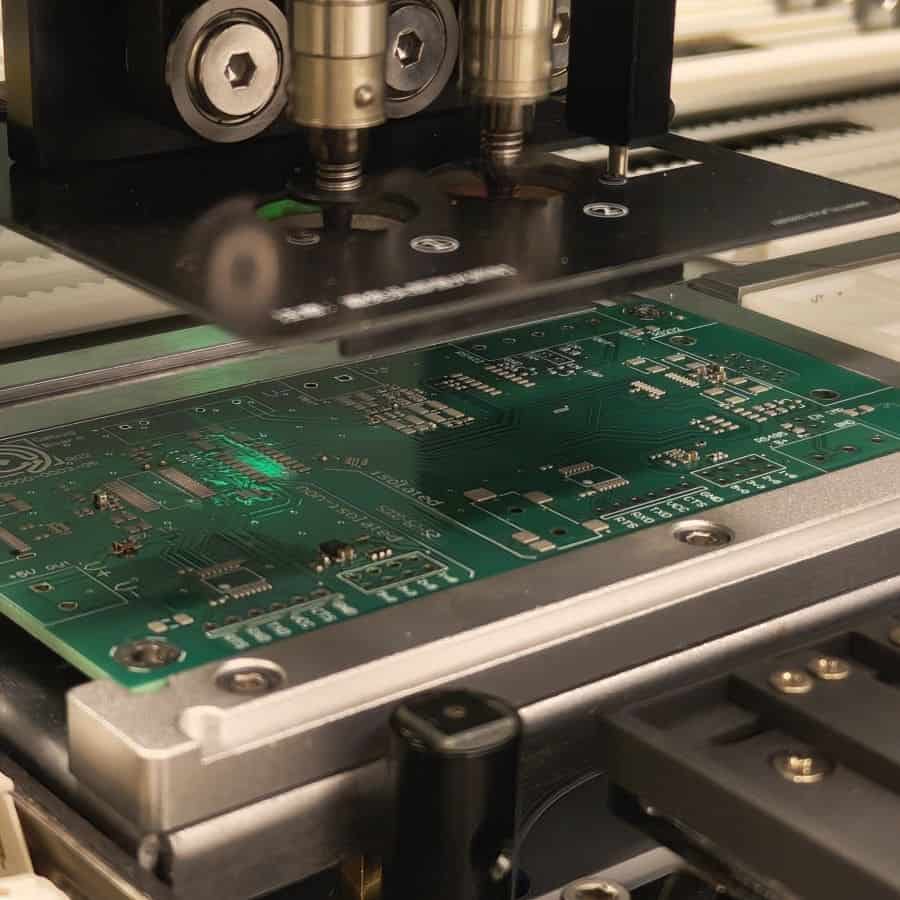
Time pressure can tempt teams to postpone EMC, RED, CE and safety-related thinking until the design looks more complete. That is risky. Compliance is rarely a final layer added at the end. It is influenced by architecture, grounding, cable routing, component selection, PCB layout, enclosure design, firmware behaviour and even the way the product is installed.
Early prototypes do not need to pass formal testing, but they should be designed with compliance risk in mind. Pre-compliance measurements, layout reviews and structured design choices can reveal problems while they are still relatively easy to fix.
For example, a prototype can help evaluate:
- Radiated and conducted emission risk from switching converters, clocks and motor drives
- Immunity behaviour under supply dips, electrostatic discharge or transient events
- RF performance and coexistence risk in connected products
- Creepage, clearance and isolation choices in power electronics
- Fault handling and safe-state behaviour in embedded firmware
The objective is not to guarantee certification during prototyping. The objective is to avoid design decisions that make compliance difficult later. For products in demanding environments, this difference matters.
Use parallel workstreams, but control the interfaces
Rapid prototyping often succeeds when hardware, embedded software, mechanical design and system engineering move in parallel. Waiting for one discipline to finish before another starts can consume too much time. However, parallel work creates a new risk: teams can drift apart if interfaces are not controlled.
A practical approach is to freeze only what must be frozen. Early in the project, define the electrical, mechanical and software interfaces that enable parallel progress. This may include connector pinouts, communication protocols, power rails, mounting constraints, update mechanisms, sensor interfaces and diagnostic signals.
Everything else can remain flexible for a defined period. That flexibility allows the prototype to evolve without blocking all teams at once.
Interface control is particularly important when external partners are involved. A mechanical partner may need board outline, connector positions and heat dissipation assumptions. A software team may need stable APIs, bootloader assumptions and hardware abstraction boundaries. A manufacturing partner may need early information about test points, panelisation constraints or component sourcing.
Without disciplined interfaces, speed becomes illusion. Each team moves quickly, but integration becomes slow and painful.
Avoid the “demo trap”
A demo prototype is useful. It can secure funding, align stakeholders, win customer feedback and help sales or management understand the product direction. The trap is treating a demo prototype as proof that the product is nearly ready.
A demo may hide fragile wiring, limited fault handling, manual calibration, poor thermal margins, development boards, unavailable components or firmware shortcuts. These are acceptable if everyone understands them. They become dangerous when they are forgotten.
To avoid the demo trap, document the prototype’s limitations as clearly as its successes. A simple engineering status note can separate what has been proven from what remains open.
| Prototype result | What to document |
|---|---|
| Proven behaviour | Test conditions, measurement data and repeatability |
| Assumed behaviour | Why the assumption is reasonable and when it must be verified |
| Known shortcuts | Temporary wiring, firmware workarounds, manual steps or non-production parts |
| Open risks | EMC, thermal, component, safety, mechanical or manufacturing uncertainties |
| Next decision | What the team can now decide, and what must wait |
This discipline helps technical directors and management make better decisions. It also protects the engineering team from unrealistic expectations after a successful demonstration.
Bring market signals into the engineering sprint
Rapid prototyping is mainly an engineering activity, but product direction also benefits from fast market feedback. For B2B electronics, this feedback may come from lead customers, machine operators, service technicians, distributors, integrators or online communities where technical users discuss practical problems.
The key is to avoid confusing feature requests with validated requirements. A customer may ask for more connectivity, but the real need could be remote diagnostics. An operator may ask for a stronger enclosure, while the real issue is cable strain or mounting method. A service team may request more LEDs, but the deeper need could be better fault logging.
Product managers and founders sometimes use customer interview tools, forum monitoring or platforms that turn Reddit conversations into customers to spot recurring pain points and language around a problem. For engineering teams, these signals are useful when they are translated into testable requirements, not when they create uncontrolled feature expansion during a prototype sprint.
Plan the path from prototype to production early
A prototype built under time pressure should not become a dead end. Even if the first version is rough, the team should already think about the transition to a production-ready design.
This includes component availability, design for manufacturing, design for test, enclosure constraints, lifecycle management and documentation quality. It also includes deciding which parts of the prototype can be reused and which must be redesigned.
A common mistake is to keep refining a prototype architecture that was never intended for production. Development boards, hand-soldered modifications and oversized modules may be acceptable in early validation, but they can create false assumptions about cost, size, thermal behaviour and manufacturability.
The best rapid prototyping strategy makes this distinction explicit:
- What is temporary and only used for learning?
- What is likely to carry forward into the production design?
- What must be redesigned for compliance, reliability or manufacturing?
- What evidence is needed before committing to a custom PCB?
Once a PCB design is being prepared, the focus should shift from proving feasibility to building a robust foundation for repeatable production. ProMicro’s article on preparing a PCB design for prototyping and volume build explains why requirements, schematic review, manufacturability, EMC, testability and documentation need attention before the design moves too far.
Decide when to involve an external electronics partner
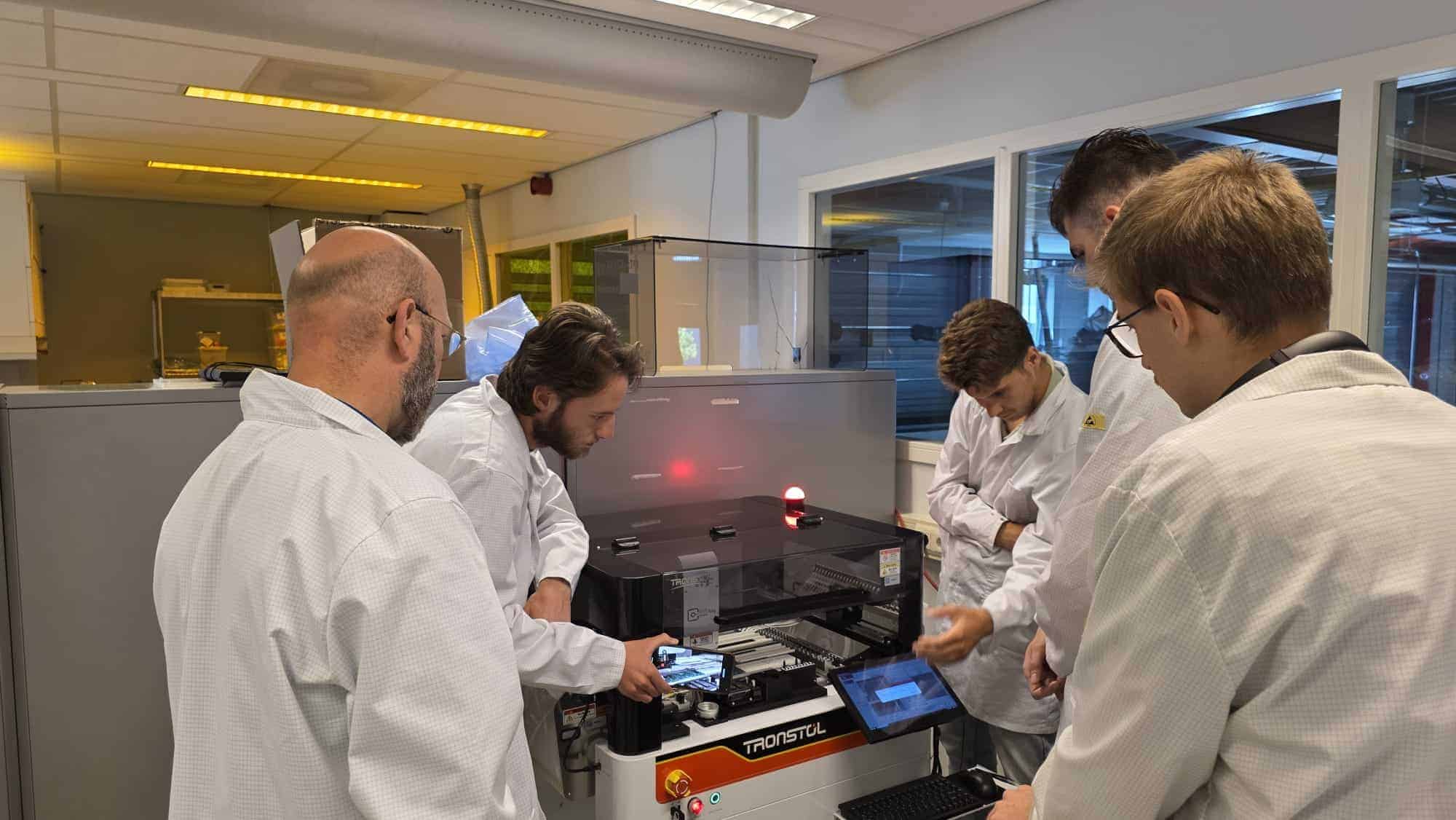
Many companies can prototype internally, especially when the concept is close to existing expertise. The question is not whether internal teams are capable. The question is whether they have enough time, specialist knowledge and system-level capacity to reduce risk quickly.
An external electronics development partner can be valuable when the project combines several difficult areas at once, such as embedded firmware, power electronics, analogue sensing, wireless communication, EMC-sensitive PCB layout and mechanical integration. The value is not only extra hands. It is the ability to spot hidden requirements and failure modes before they become expensive.
This is particularly relevant when:
- The prototype must support a management, customer or investor decision soon
- Internal engineers are already committed to existing products or customer projects
- The product needs to operate in a harsh or regulated environment
- The team lacks specific knowledge in power electronics, analogue design, EMC or embedded hardware
- The prototype must lead directly into a production-ready development path
For ProMicro, rapid prototyping sits within a wider development process: embedded system development, power and analogue electronics, PCB design, enclosure considerations, system engineering and support towards manufacturing. That integrated view matters when time is short, because decisions in one discipline can quickly affect all others.
A practical rapid prototyping checklist for time-pressured teams
Before starting the next sprint, use a short checklist to keep the prototype focused.
| Question | Why it matters |
|---|---|
| What decision must this prototype support? | Prevents building features that do not reduce uncertainty |
| Which technical risk is most expensive to discover late? | Focuses effort on EMC, thermal, power, analogue, firmware or integration risks |
| What operating conditions must be represented? | Avoids lab-only validation that fails in the field |
| What evidence will be accepted by stakeholders? | Aligns engineering data with management and customer decisions |
| Which shortcuts are allowed? | Keeps the sprint fast while making limitations visible |
| What must not be compromised? | Protects safety, compliance direction and production readiness |
| How will the prototype influence the production design? | Reduces the risk of a dead-end demonstrator |
The checklist does not replace engineering judgement, but it gives teams a shared frame when schedules are tight.
Frequently asked questions
How fast can an electronics prototype be developed? The timeline depends on the complexity of the system, component availability, PCB requirements, firmware scope and test depth. Simple feasibility prototypes may be built quickly, while integrated prototypes involving power electronics, wireless communication, analogue sensing or enclosure constraints require more planning. The important question is not only speed, but whether the prototype produces reliable evidence for the next decision.
Is rapid prototyping suitable for regulated or safety-sensitive products? Yes, but the prototype strategy must be disciplined. Early prototypes can explore feasibility and risk, while keeping EMC, CE, RED and safety-related design choices in view. A prototype should not be treated as certified or production-ready unless it has gone through the appropriate design, verification and compliance process.
Should we prototype with development boards or custom electronics? Development boards can be useful for fast feasibility work, especially for firmware, sensors or connectivity. Custom electronics become more important when the risks involve PCB layout, power integrity, EMC, thermal behaviour, form factor, connectors, analogue accuracy or manufacturability. Many projects benefit from using both at different stages.
What is the biggest mistake teams make under time pressure? The biggest mistake is building a prototype that looks complete but does not answer the highest-risk questions. A polished demo can be valuable, but it should not hide unresolved issues around compliance, reliability, production scaling or real-world operating conditions.
When should we involve ProMicro in a rapid prototyping project? It is useful to involve ProMicro when the prototype must reduce technical risk across hardware, embedded software, power electronics, analogue design, PCB layout, enclosure constraints or manufacturing preparation. Early involvement helps align the prototype with the path towards a reliable, scalable product.
Turning time pressure into technical clarity
Rapid prototyping works best when it is not treated as a shortcut around engineering discipline. For electronics teams under time pressure, the real value is focused learning: identifying the assumptions that matter, testing them in realistic conditions and using the results to make better product decisions.
A well-planned prototype can help you move faster without losing sight of reliability, compliance direction and manufacturability. It can also reveal when a concept needs adjustment before the cost of change becomes high.
If your team is developing a complex electronic product and needs additional expertise or capacity, ProMicro can support the journey from early concept and prototype validation towards production-ready electronics. The earlier the key risks are visible, the easier they are to manage.