
Choosing circuit board assembly services is not only a purchasing decision. For OEMs and technical product companies, it is a risk management decision that affects reliability, compliance, production yield, serviceability and lifecycle cost.
A low unit price can look attractive during procurement, especially when the bill of materials is already under pressure. But if the assembly partner cannot handle power integrity, thermal stress, test coverage, component traceability or manufacturing feedback, the real cost often appears later. It may show up as rework, failed EMC testing, unstable field behaviour, delayed certification or a redesign just when the product should be moving towards volume manufacturing.
The wiser approach is to evaluate circuit board assembly services as part of the full product development process. That means looking beyond soldering capability and asking whether the service provider can support the product context, the engineering intent and the realities of professional use.
Start with the product risk, not the assembly quote
Before comparing suppliers, define what the board must survive. A PCB for a consumer accessory has a very different risk profile from a board used in a maritime control unit, industrial robot, high-value machine, defence application or automotive subsystem. The assembly process may look similar on paper, but the requirements behind it are not.
A robust supplier conversation should begin with the use case. Where will the product operate? What temperature range, vibration level, humidity, load variation, duty cycle and electromagnetic environment are expected? Will the product contain motor drives, sensors, wireless communication, high-current paths, low-noise analogue signals or safety-relevant functions?
| Product factor | Why it affects assembly | Questions to ask |
|---|---|---|
| Thermal load | Heat changes solder joint stress, component life and enclosure behaviour | How will thermal hotspots be reviewed before and after assembly? |
| Vibration and shock | Mechanical stress can damage solder joints, connectors and heavy components | Are component anchoring, underfill, staking or layout changes considered when needed? |
| Power density | High current paths need correct copper, spacing, solder quality and thermal relief | Can the partner review power electronics risks before production? |
| Analogue sensitivity | Noise, leakage and contamination can affect measurement accuracy | How are cleanliness, layout feedback and test limits handled? |
| Wireless or IoT functions | RF behaviour can change due to layout, enclosure and assembly variation | Can the supplier coordinate assembly choices with RF and EMC considerations? |
| Lifecycle duration | Professional products often need long-term support and component continuity | How are substitutions, obsolescence and traceability managed? |
This is where many selection processes go wrong. They start with a Gerber package and a request for quotation, while the most important engineering assumptions remain implicit. The best assembly partner will ask questions that reveal hidden requirements, not only respond to the files provided.
Match the service model to your development stage
Not every circuit board assembly service is designed for the same stage of product maturity. Some suppliers are efficient at building standard production batches from stable documentation. Others are better suited to prototypes, engineering iteration and early manufacturing feedback. A mismatch can create delays even when the supplier is technically competent.
For an early prototype, flexibility and engineering feedback matter more than perfect production efficiency. You may need rapid builds, component alternatives, manual inspection, bring-up support and practical advice about layout changes. For a pilot series, the emphasis shifts towards repeatability, test strategy and confirming that the design can be manufactured consistently. For volume production, process control, documentation discipline, supply chain resilience and quality data become more important.
A wise choice is not always the largest or fastest assembly house. It is the partner whose service model fits the maturity of your product. If your design still contains uncertainty around power behaviour, firmware interaction, EMC, enclosure integration or sensor performance, you need more than a transactional assembly process.
When the board is already part of a broader embedded system, assembly decisions should be coordinated with system engineering. Component placement, connector choices, test pads, firmware loading, calibration procedures and enclosure constraints all influence the success of the final product.
Look for design-for-assembly feedback before release
A strong assembly partner should help identify problems before the first batch is built. Design for assembly is not just about whether a pick-and-place machine can place the parts. It is about whether the board can be assembled repeatedly, inspected effectively, tested properly and maintained over its intended lifecycle.
Typical issues include insufficient spacing around components, poor access for inspection, unclear polarity markings, awkward connector positions, difficult thermal profiles, unsuitable panelisation or missing test points. These are not minor details. They affect yield, rework, lead time and long-term quality.
This is why early PCB assembly planning that prevents costly rework is valuable. It allows engineering, purchasing and manufacturing stakeholders to align before design data becomes expensive to change.
A good review should include the bill of materials, PCB stack-up, component packages, footprints, soldering process, inspection method, test access, programming requirements and expected production volume. If the supplier only checks whether the files are complete, you may miss the deeper risks.
Evaluate technical breadth, especially for complex electronics
Professional electronics rarely fail because one isolated task was difficult. Problems often arise at the interfaces: power electronics influencing analogue measurements, wireless modules creating EMC concerns, firmware timing affecting load behaviour, or enclosure design changing thermal performance.
This is why technical breadth matters when selecting circuit board assembly services. A supplier does not need to own every development activity, but it should understand how assembly choices interact with the full system.
For power electronics, ask how the partner handles high-current connections, copper balance, creepage and clearance, thermal relief, component derating and solder joint integrity. For analogue electronics, discuss cleanliness, grounding, leakage paths, noise sensitivity and calibration. For embedded systems, consider programming, functional testing, serial number handling and firmware version control.
If your product includes motors, sensors, batteries, wireless connectivity or safety-relevant behaviour, the assembly process should be linked to engineering verification. Otherwise, the board may be assembled correctly but still fail to perform reliably in the actual product.
Check quality control, traceability and test coverage
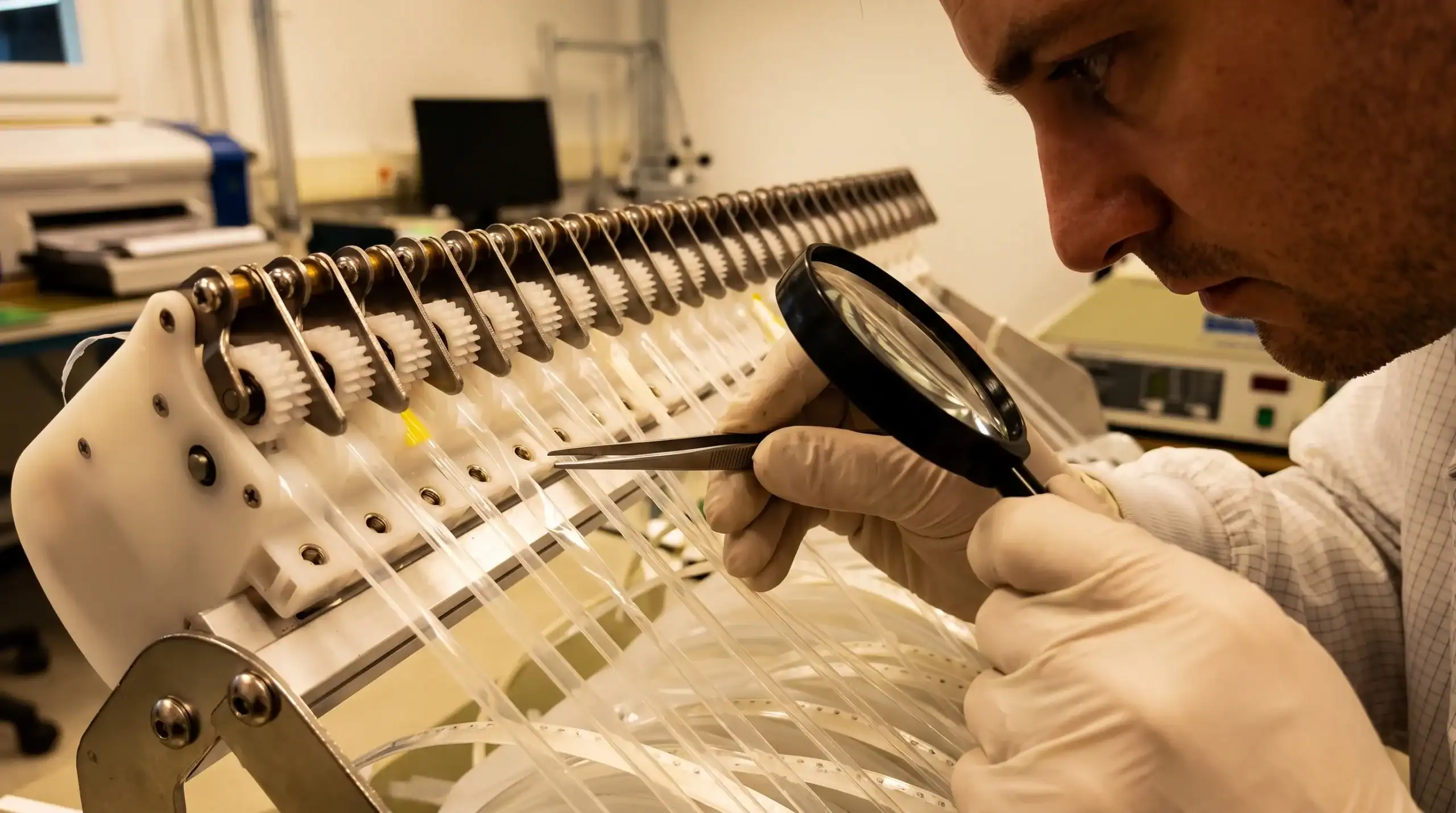
Quality in circuit board assembly is not a single inspection step at the end of the line. It is a controlled sequence of material verification, solder paste management, placement accuracy, reflow control, inspection, rework discipline, cleaning where required, programming, functional testing and documentation.
Common industry references such as IPC-A-610 and J-STD-001 can help define workmanship expectations, but standards alone are not enough. You still need product-specific test coverage. A board can pass visual inspection and still have an incorrect sensor response, unstable power rail or firmware mismatch.
Ask how defects are detected and recorded. Does the supplier use automated optical inspection where appropriate? Is X-ray inspection available for hidden joints such as BGAs or QFNs? Are test results stored by serial number or batch? Can the supplier separate workmanship issues from design-related failures? How is rework controlled and documented?
For professional products, traceability is particularly important. If a field issue occurs after launch, you need to understand which components, assembly batches, firmware versions and test results were involved. Without that information, root cause analysis becomes slower and more uncertain.
Consider supply chain resilience and lifecycle support
A circuit board is only as stable as the components, materials and processes behind it. Component availability, second-source options, end-of-life notices and approved substitutions can all affect production continuity. This matters especially for machine manufacturing, defence, maritime, automotive and high-tech products where lifecycles can extend for many years.
A capable assembly partner should not silently replace components without engineering approval. Even a passive component substitution can affect analogue accuracy, EMC behaviour, thermal performance or long-term reliability. For critical components, the approval process should be clear and documented.
Lifecycle thinking also includes repairability and service support. Consumer repair businesses illustrate how much downstream value depends on replaceable parts, known configurations and predictable workmanship. Professional OEM products have different requirements, but the same principle applies: design and assembly choices influence how easily products can be serviced, diagnosed and supported in the field.
For OEMs, the goal is not simply to get boards built today. It is to ensure that the product can be produced, maintained and improved over time. That requires component lifecycle awareness, controlled documentation, change management and clear communication between engineering and manufacturing.
Assess manufacturing readiness, not just assembly capability
A supplier can assemble a board and still leave you with a product that is not ready for production. Manufacturing readiness involves stable documentation, repeatable processes, defined tests, known acceptance criteria, packaging requirements, handling rules and feedback loops for defects.
It also requires decisions about the PCB itself. Laminate selection, copper thickness, surface finish, solder mask quality, stack-up and panelisation can influence both reliability and assembly yield. For a deeper engineering view, ProMicro has covered how PCB fabrication and assembly choices affect product quality across the full product lifecycle.
Compliance readiness should also be considered early. EMC, RED, CE and safety-related requirements cannot be solved by assembly inspection alone. They are influenced by schematic choices, PCB layout, grounding, filtering, enclosure integration, firmware behaviour, cable routing and production consistency.
A wise assembly partner will not promise certification outcomes from the assembly line. Instead, it will support a development process where compliance risks are considered before the product reaches formal testing. That distinction matters.
Compare suppliers with engineering questions, not only commercial terms
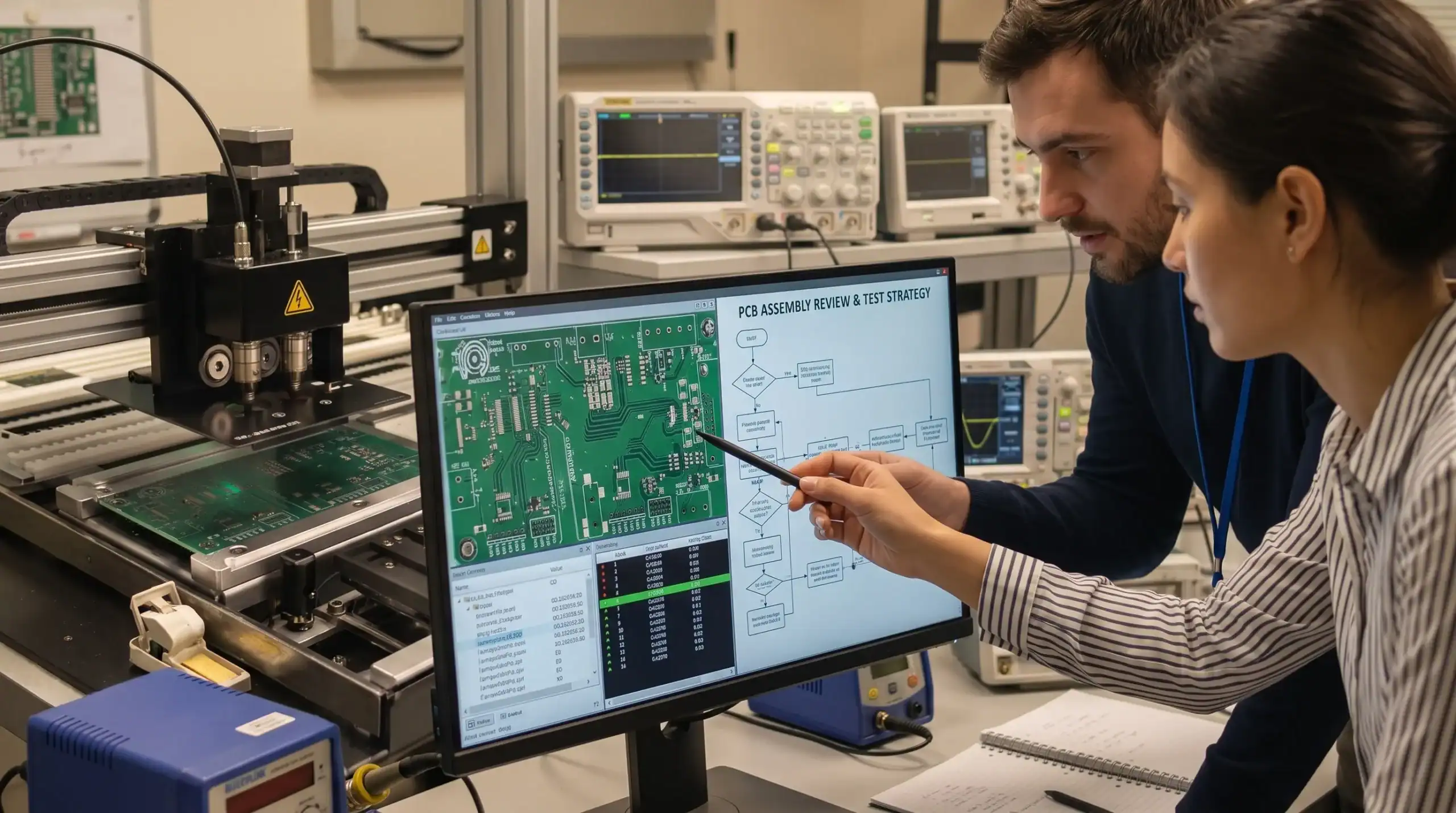
Price, lead time and minimum order quantity are valid comparison points, but they are not enough for professional electronics. The most useful supplier evaluation combines commercial clarity with engineering depth.
| Evaluation area | Weak signal | Strong signal |
|---|---|---|
| Quotation | Unit price only, with limited assumptions | Clear scope, assumptions, exclusions and non-recurring costs |
| Engineering feedback | No review until files are released | Early DFM, DFT and risk feedback before build |
| Testing | Basic power-on check or visual inspection only | Product-specific functional test strategy and traceable results |
| Change control | Informal substitutions or undocumented process changes | Controlled approval process for components, documents and revisions |
| Communication | Purchasing-led communication only | Direct technical dialogue with engineering stakeholders |
| Scaling | Prototype build treated as separate from production | Prototype decisions aligned with pilot and volume manufacturing needs |
The goal is not to create unnecessary supplier bureaucracy. It is to avoid surprises. A good supplier should be able to explain how it handles risk, how it communicates technical concerns and how it supports the transition from prototype to production.
Watch for warning signs during selection
Some risks are visible before you place the first order. If a potential supplier avoids technical questions or reduces every discussion to price and lead time, that is a concern for complex products.
Warning signs include:
- Reluctance to review the bill of materials, stack-up or assembly drawings before quoting
- No clear process for component substitutions or end-of-life risks
- Limited understanding of power, analogue, RF, EMC or thermal design implications
- No practical discussion about programming, calibration or functional testing
- Poor documentation control for revisions, serial numbers or test results
- Minimal feedback after prototype builds, even when issues are found
- Rework that is treated as routine rather than analysed for root cause
These warning signs do not always mean the supplier is unsuitable. They may simply indicate that the supplier is better suited to simpler or more mature products. The key is to recognise the fit before your project depends on it.
Build a structured selection process
Choosing wisely becomes easier when you separate the decision into clear steps. First, define the product risk and operating environment. Then classify the development stage: prototype, pilot, production or lifecycle support. Next, ask suppliers to review the same technical data so their responses can be compared fairly.
Do not rely only on polished capability lists. Ask for evidence of how the supplier handles engineering feedback, test strategy, documentation, component changes and production scaling. A technical conversation with the people who will actually support the build is often more valuable than a generic sales presentation.
Finally, consider whether you need an assembly supplier only, or a broader electronics development partner. If your product combines embedded software, power electronics, analogue electronics, sensors, connectivity, mechanical constraints and compliance expectations, an integrated development approach can reduce risk before assembly even begins.
Frequently asked questions
What are circuit board assembly services? Circuit board assembly services cover the process of placing and soldering electronic components onto a printed circuit board, often including inspection, programming, testing, rework control and production documentation. For professional products, the best services also provide manufacturability feedback and support for reliable production.
Should I choose the cheapest PCB assembly quote? Not without understanding what is included. A cheaper quote may exclude engineering review, test development, traceability, controlled rework or lifecycle support. For complex products, these omissions can create higher costs later through delays, failures or redesigns.
When should an assembly partner be involved? Ideally before the PCB layout and bill of materials are fully frozen. Early involvement allows the partner to identify manufacturability, test access, component and documentation risks while changes are still practical.
How important is test strategy in board assembly? Test strategy is critical because workmanship inspection does not prove that the product functions correctly. Functional testing, programming checks, calibration where needed and traceable test results help confirm that each board meets the intended product behaviour.
What is the difference between an assembly supplier and an electronics development partner? An assembly supplier focuses mainly on building boards from released data. An electronics development partner can also support system engineering, embedded systems, power electronics, analogue design, PCB design, prototyping and manufacturing preparation, which is valuable when the product still contains technical uncertainty.
Choose a partner that understands the full product
Wise supplier selection starts with a simple question: will this partner only assemble the board, or will it help protect the reliability of the product?
For professional electronics, that difference matters. The right partner understands the explicit requirements in your documentation and the hidden risks created by real-world use, compliance expectations, power behaviour, software interaction, component availability and production scaling.
ProMicro supports companies developing complex electronic products from first idea through prototyping and towards volume manufacturing. If your project requires embedded systems, power electronics, analogue electronics, PCB design, enclosure considerations and lifecycle thinking in one coordinated process, ProMicro can help you approach circuit board assembly as part of a reliable product development strategy.