Choosing PCB assembly services is not only a purchasing decision. For professional electronics, it is a risk decision that affects reliability, manufacturability, compliance readiness, field performance and the cost of future product changes.
A board that works once on a lab bench can still fail when exposed to vibration, temperature variation, EMC stress, moisture, operator misuse or production variation. That is why the right assembly partner should be assessed on more than price, lead time and component placement capability. You need to understand how they handle design feedback, process control, traceability, testing, sourcing and scale-up.
For engineering managers, CTOs, product owners and technical directors, the core question is simple: will this partner help us build a product that can be manufactured repeatedly, tested effectively and supported throughout its lifecycle?
Start with product risk, not only the assembly quote
The best PCB assembly services for a simple consumer accessory are not necessarily the best fit for a motor drive, maritime sensor system, defence subsystem, industrial controller or connected machine module. Before comparing suppliers, define the operating context and risk level of the product.
A robust supplier selection process should consider the environment in which the electronics will operate, the consequences of failure and the maturity of your design. If the board controls movement, power conversion, safety-related signalling, wireless communication or critical measurement, assembly quality becomes part of the product risk model.
Typical risk factors include:
- High current, high voltage or fast switching circuits
- Fine-pitch components, BGAs, QFNs or dense mixed-signal layouts
- Wireless modules, antennas or RF-sensitive circuitry
- Harsh environments such as vibration, humidity, salt air or heat
- Long product lifecycles with component availability concerns
- Certification exposure, including EMC, RED, CE or sector-specific requirements
A supplier that asks about these factors early is usually more valuable than one that only asks for Gerbers, BOM and quantities. Good PCB assembly starts with understanding what the product must survive.
Look for engineering feedback before the first build
A capable assembly partner should identify manufacturability risks before boards enter production. This is especially important during prototype and pilot stages, when design changes are still manageable.
Design for manufacturing and design for assembly feedback may cover stencil design, solder paste apertures, component spacing, panelisation, fiducials, thermal relief, connector placement, access for inspection, selective soldering constraints and test point availability. For power electronics, additional attention may be needed around creepage, clearance, copper weight, thermal paths and mechanical stress on heavy components.
This is where the distinction between a transactional assembler and an engineering-aware partner becomes clear. If the supplier simply builds exactly what is sent without structured feedback, hidden issues may only appear during rework, test, certification or the first volume batch. If you want to go deeper into the link between early engineering decisions and final product quality, ProMicro’s article on PCB fab and assembly choices that affect product quality covers this relationship in more detail.
For complex products, ask whether the assembly team can review the production data package before committing to a build. A useful review should produce concrete comments, not vague approval.
Assess quality control, inspection and traceability
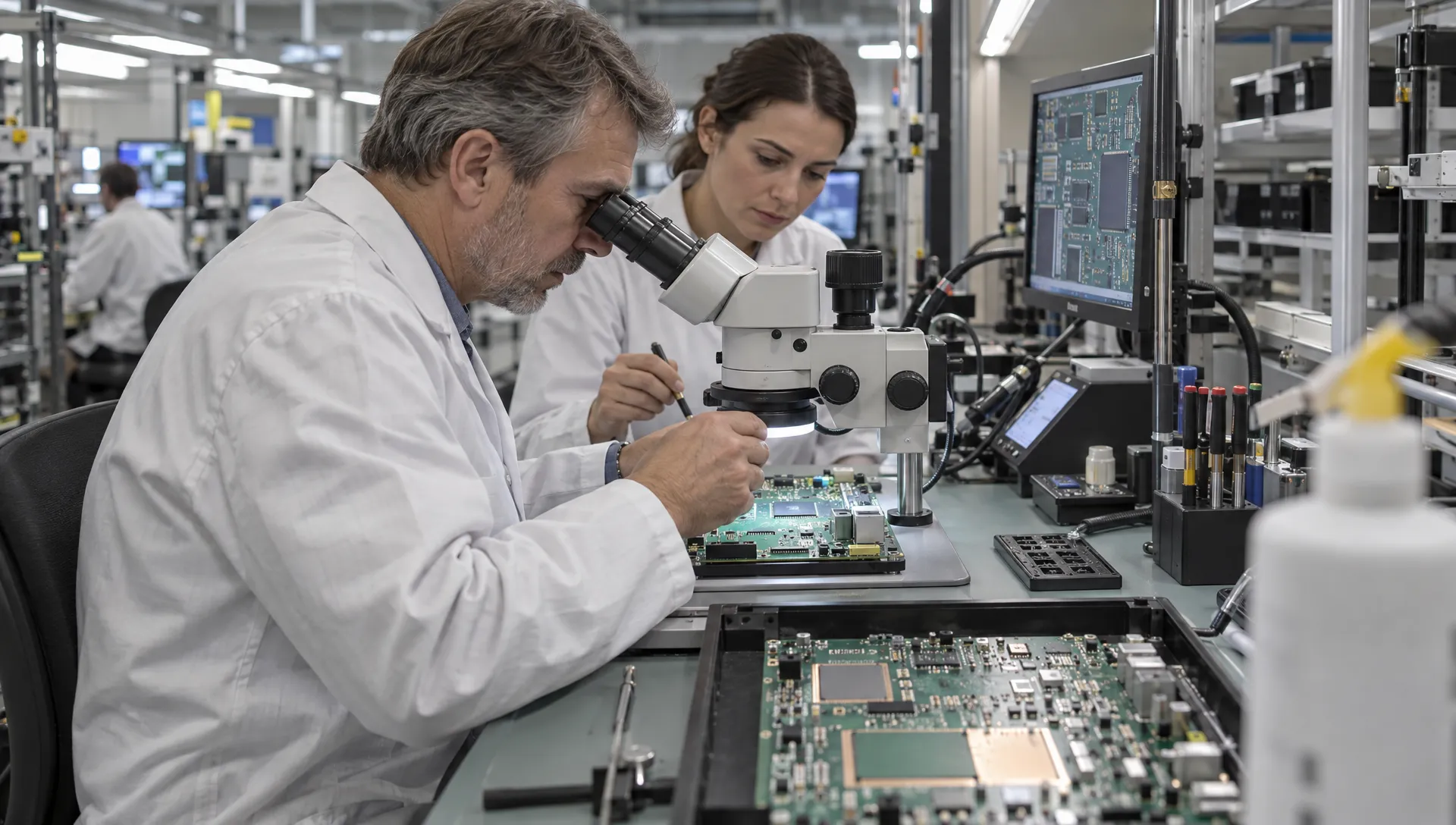
Quality in PCB assembly is not one inspection step at the end of the line. It is the result of controlled inputs, stable processes, trained operators, documented standards and feedback loops.
Depending on the product category, you may need workmanship expectations aligned with IPC-A-610 Class 2 or Class 3, controlled soldering processes, ESD-safe handling, moisture-sensitive device controls and clear rework procedures. For high-reliability products, traceability is also essential. You should know which component lots, PCB batches, process steps and test outcomes are connected to each serialised product.
| Area to assess | What to look for | Why it matters |
|---|---|---|
| Incoming control | Checks on bare PCBs, component packaging, moisture sensitivity and documentation | Prevents assembly problems caused by poor inputs |
| Process inspection | Solder paste inspection, AOI, X-ray where appropriate and first article checks | Detects defects before they become expensive rework |
| Workmanship standards | Clear assembly criteria, operator training and documented rework rules | Reduces variation between builds and operators |
| Traceability | Batch records, serialisation, component lot tracking and test history | Supports root cause analysis and lifecycle control |
| Test records | Measurable pass or fail data, not only informal visual approval | Helps identify trends and recurring weaknesses |
Be careful with generic statements such as “all boards are inspected”. Ask what is inspected, how it is inspected, what defect criteria are used and how findings are fed back into design or process improvements.
Evaluate sourcing discipline and lifecycle awareness
Component sourcing is often where assembly risk enters quietly. A BOM may look stable during prototype sourcing, then become fragile when production quantities increase or components reach end of life.
Strong PCB assembly services should have a disciplined approach to approved manufacturers, authorised distribution, alternates, lead times, storage conditions and substitution control. For professional markets, uncontrolled component changes can affect EMC behaviour, thermal performance, firmware compatibility, analogue accuracy or long-term reliability.
This is particularly relevant for embedded systems, power electronics and connected products where one substituted regulator, connector, oscillator, RF component or sensor can change product behaviour. The supplier should not replace parts without approval, and the engineering team should define which components are critical, which alternates are acceptable and which require validation before use.
Lifecycle awareness is equally important. If your product must remain available for many years, the assembly partner should support component availability discussions early enough to avoid last-minute redesigns.

Make test strategy part of the assembly discussion
A common mistake is treating test as something that happens after assembly, rather than something that must be designed into the product. Test access, firmware loading, calibration, boundary scan, in-circuit testing and functional test requirements can all affect PCB layout and assembly planning.
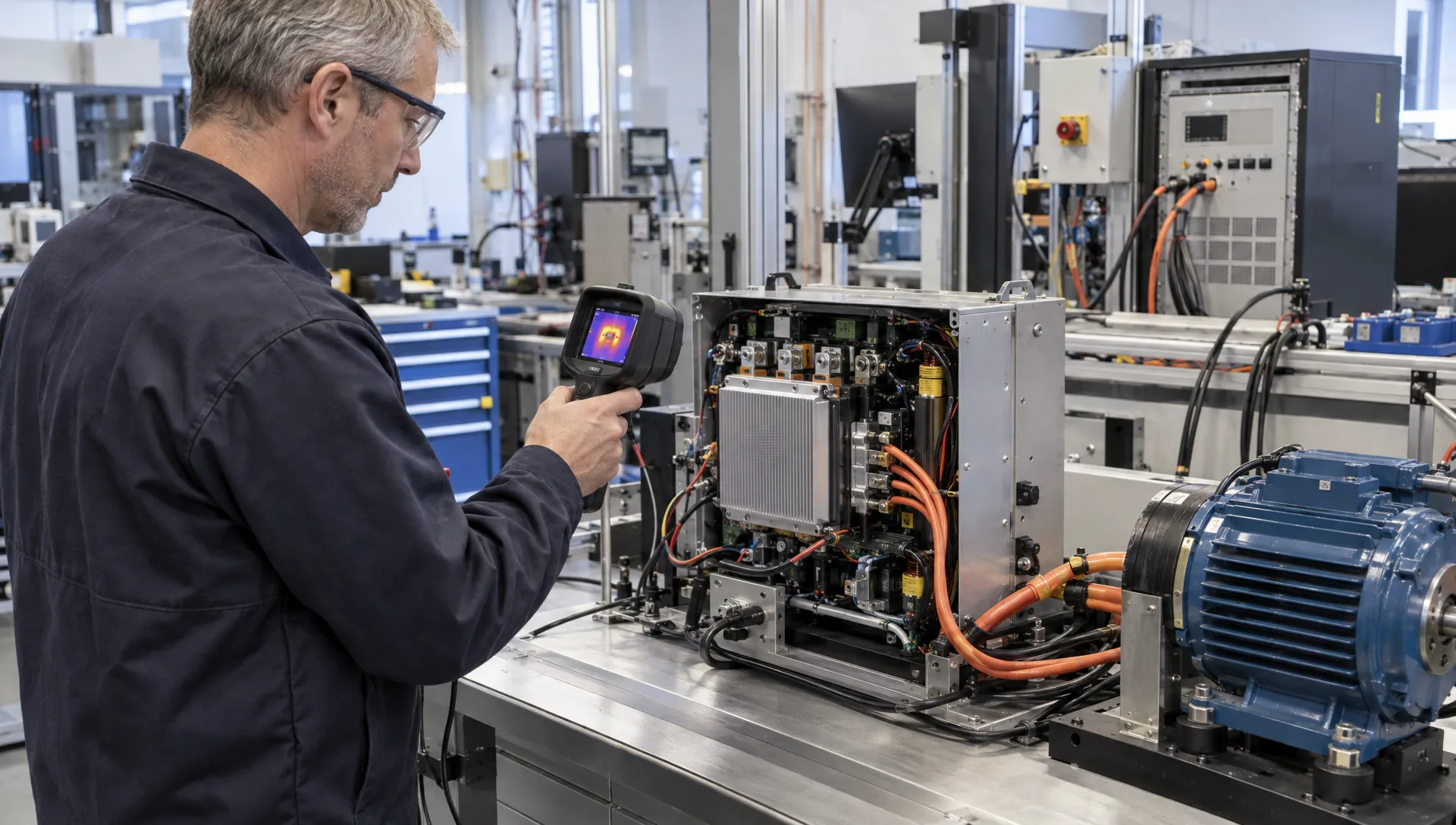
For a simple board, AOI and a basic functional check may be sufficient. For a machine controller, motor drive, medical-adjacent device, maritime unit or wireless product, you may need a more structured test plan. That plan may include programming, power sequencing checks, current consumption limits, communication tests, sensor calibration, relay or motor output verification and serial number registration.
Good assembly partners do not only ask, “How many boards?” They ask, “How will we prove every board works as intended?” That question is critical when moving from prototypes to repeatable manufacturing. ProMicro’s guide to assembly PCB planning that prevents costly rework explains how test strategy, documentation and manufacturability decisions should be considered before production pressure increases.
Testing also supports compliance readiness. It does not replace formal EMC, RED or CE assessment, but it can reveal design or process weaknesses before certification activities become expensive. For example, unstable power rails, inconsistent grounding, poor connector retention or firmware programming errors can all create problems that appear unrelated to assembly until data proves otherwise.
Check whether the service can scale from prototype to volume
Prototype assembly and volume assembly require different strengths. During prototyping, flexibility and engineering feedback are important. During volume production, repeatability, process control, documentation and supply chain discipline become more important.
The transition between the two stages is where many products suffer. A prototype build may use hand rework, flexible component sourcing and informal test notes. A production build needs controlled documentation, stable processes, validated test fixtures, defined acceptance criteria and a clear change management process.
Before choosing a partner, ask how they handle pilot builds and new product introduction. A good pilot build is not just a small production run. It is a controlled learning phase where assembly issues, test failures, documentation gaps and process assumptions are made visible before volume commitments are made.
Your production data package should also be assessed. At minimum, it may include PCB fabrication data, assembly drawings, BOM with approved alternates, pick-and-place data, polarity information, programming instructions, test procedures, labelling requirements, packing instructions and revision control. The exact package depends on product complexity, but informal files scattered across email chains are rarely enough for reliable scaling.
Look for operational maturity and clear communication
Technical capability is necessary, but it is not sufficient. PCB assembly services also need operational discipline. Missed handoffs, unclear ownership, slow feedback and poor issue reporting can delay product launch even when the assembly equipment itself is adequate.
Look for a supplier that communicates risks early, documents deviations clearly and separates assumptions from confirmed requirements. When a BOM issue, soldering concern or test failure appears, you need structured escalation, not vague status updates.
Operational maturity is a broader business principle, not limited to electronics. For example, companies outside engineering also improve delivery by removing repetitive bottlenecks and formalising workflows. In PCB assembly, the same underlying discipline appears through controlled documentation, traceable decisions, repeatable processes and measurable feedback loops.
The best partner is not the one that says every request is easy. It is the one that can explain trade-offs, identify hidden risks and help your team make informed decisions.
Practical checklist for comparing PCB assembly services
When comparing suppliers, avoid relying only on unit price. A lower assembly quote can become more expensive if it leads to rework, certification delays, redesigns, field failures or poor scalability.
| Decision area | Strong signal | Risk signal |
|---|---|---|
| Product understanding | Supplier asks about environment, function, compliance exposure and failure impact | Supplier only asks for quantity and delivery date |
| DFM feedback | Specific comments on layout, stencil, test access, panelisation and component risks | No feedback until boards fail inspection or test |
| Quality process | Documented inspection, traceability, rework control and acceptance criteria | “We inspect everything” without detail |
| Sourcing | Controlled alternates, authorised channels and lifecycle awareness | Unapproved substitutions or unclear sourcing routes |
| Testing | Defined functional test, programming, calibration and data capture where needed | Test treated as optional or informal |
| Scale-up | Pilot build learning, change control and production documentation | Prototype methods carried directly into volume |
| Collaboration | Clear communication, issue logs and engineering discussion | Slow responses, unclear responsibility or hidden assumptions |
This checklist is not a replacement for supplier qualification, but it helps technical teams focus the conversation on product risk rather than only commercial terms.
Warning signs to take seriously
Some problems become visible before a purchase order is placed. If a supplier avoids technical questions, cannot explain inspection methods or discourages DFM review, that is worth investigating.
Be cautious if you see these warning signs:
- No structured review of the BOM, PCB data or assembly drawings before quotation
- Reluctance to discuss test strategy, traceability or rework control
- Unclear handling of component substitutions or obsolete parts
- No clear process for revision control and engineering changes
- Limited understanding of EMC-sensitive, power, analogue or embedded products
- Pressure to proceed quickly despite incomplete production data
Not every project needs the same level of process maturity. However, if your product is technically complex, safety-relevant, exposed to harsh conditions or planned for long-term production, these gaps can become expensive quickly.
Frequently asked questions
What are PCB assembly services? PCB assembly services cover the process of placing and soldering components onto printed circuit boards, often including sourcing, inspection, programming, testing, rework, documentation and production support. For professional products, the value lies not only in assembly capacity but also in engineering feedback and process control.
How do I choose between prototype and volume assembly partners? Choose based on your development stage and risk level. Prototype assembly should provide flexibility and fast engineering feedback. Volume assembly should provide repeatability, traceability, stable sourcing, validated tests and disciplined change control. Some projects benefit from a partner who can support both stages.
Should PCB assembly services help with DFM? Yes, especially for complex electronics. DFM feedback can reduce soldering issues, inspection problems, test limitations and production rework. It is most valuable before the first build, when design changes are still relatively low cost.
Does PCB assembly quality affect EMC or CE compliance? Assembly quality does not replace formal compliance assessment, but it can influence compliance readiness. Poor grounding, inconsistent component placement, uncontrolled substitutions, weak solder joints or inadequate cable and connector handling can all contribute to performance issues.
What documentation should I prepare before requesting a quote? Typical documentation includes PCB fabrication data, BOM, pick-and-place file, assembly drawing, test requirements, firmware programming instructions, mechanical constraints, revision information and any known compliance or environmental requirements.
Build assembly decisions into the product development process
The strongest PCB assembly outcomes usually come from early collaboration between product engineering, PCB design, embedded software, purchasing, test development and manufacturing support. Treating assembly as a late-stage handoff increases the risk of rework, delays and avoidable product weaknesses.
ProMicro supports companies developing professional electronics from concept and prototyping through to manufacturing preparation and lifecycle thinking. With expertise in embedded systems, power electronics, analogue electronics, PCB design and system engineering, ProMicro helps teams reduce technical risk and build products that are designed for real-world use, not just first-time functionality.